Knife Comparisons
Head-to-heads for the decisions people actually get stuck on — chef's knife versus santoku, gyuto versus a Western chef's knife.
Most knife decisions come down to two shapes fighting over the same job. Should you buy a chef’s knife or a santoku? Is a gyuto really different from the Western chef’s knife you already own, or just a pricier version of it? The marketing is no help — every knife is “versatile” and “razor sharp.” The answers actually live in three measurable things: blade length, blade profile, and the steel-and-geometry underneath. This hub settles the common head-to-heads on those terms, each with a decision table you can read in ten seconds.
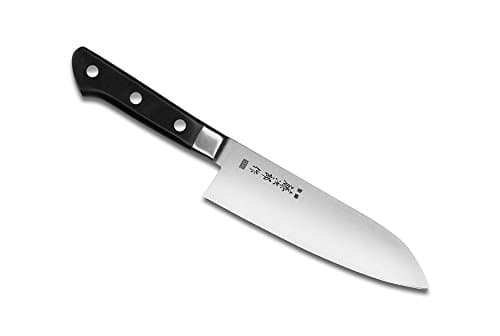
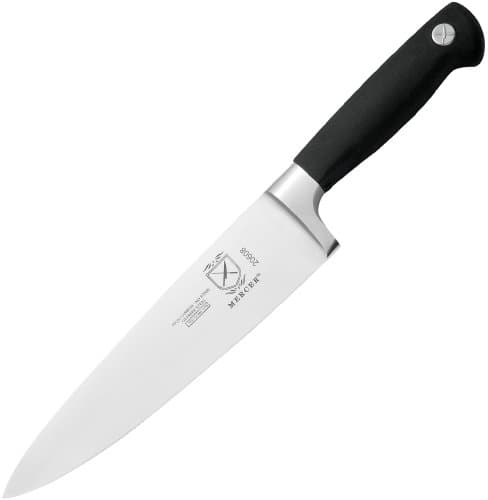
The single most useful concept here is profile— how curved or flat the cutting edge is. A curved “belly” is built for a rocking cut, where the tip stays on the board and you rock the blade through herbs, garlic and onions. A flat edge is built for a push cutor a straight up-and-down chop, where the whole edge meets the board at once. A Western chef’s knife has the most belly; a gyuto is flatter; a santoku is flatter still and stops short of a fine tip. Which one suits you is really a question of how youalready cut, and that’s where our chef knife vs santoku comparison starts.
The second axis is steel and hardness. A gyuto and a Western chef’s knife can be the same length and shape and still cut very differently, because the gyuto’s harder steel (often 60+ HRC) takes and holds a more acute edge, while the softer Western blade (55–58 HRC) is tougher and easier to sharpen. That trade-off — keenness and edge retention versus toughness and forgiveness — is the whole story of our gyuto vs chef knife comparison, and it’s explained from first principles in our steel and hardness guide.
Beyond the shape questions there are two broader ones. Japanese vs German knives takes the hardness-versus-toughness trade-off up a level and settles it for whole traditions — including what modern German grinds have changed. And chef knife vs cleaver untangles the one word that describes two unrelated tools: a thin Chinese slicing knife that can replace a chef’s knife, and a heavy bone chopper that cannot. For the flat-edge specialists, see gyuto vs santoku and chef knife vs nakiri, and if you are choosing between those two specifically, santoku vs nakiri comes down to one centimeter of tip. Going the other way in size, chef knife vs utility knife settles the second-knife question: a utility knife is not a small chef’s knife, and buying one that is nearly the same length as the knife you already own is the most common way to waste money in a knife drawer.
Other comparisons here are about what to buy rather than which shape. Tojiro vs Shun puts two knives with near-identical core hardness side by side and shows exactly what the price gap buys; Victorinox vs Mercer does the same at the budget end, where stamped and forged reach the same price. Shun vs Wüsthof is really a question about how much maintenance you want to do; Wüsthof vs Zwilling separates two forged German knives made in the same town; and Shun vs Miyabi comes down to edge angle, the bolster and what each maker will put in writing. The rest are about materials and method rather than knives: carbon vs stainless, forged vs stamped, whetstone vs electric sharpener, diamond stone vs whetstone, 1000 vs 6000 grit and honing steel vs sharpening steel.
Every comparison below links to the relevant type guides and to the roundups where we name specific picks with live prices, so you can go from “which shape?” to “which knife, and what does it cost right now?” without guessing. If you’re not sure a comparison even applies to you yet, start with the knife types explainer — it maps every common blade shape to the task it’s actually for.
Everything in Compare
Chef Knife vs Santoku
Blade length, profile, rock-cut versus push-cut, and which one suits how you actually cook — with a decision table.
Gyuto vs Chef Knife
Same job, different steel and geometry. Why a gyuto feels sharper, and when a Western chef's knife is the smarter buy.
Japanese vs German Knives
The whole argument in one place: hardness against toughness, 15° against 20°, whetstone against honing rod — and which side your kitchen is on.
Gyuto vs Santoku
Two Japanese knives, one decision: 210 mm of reach and a tip, or 170 mm of flat, nimble blade. Same steel, different jobs.
Chef Knife vs Nakiri
A nakiri is not a shorter chef's knife — it has no tip and a dead-flat edge. What that buys you on vegetables, and what it costs everywhere else.
Chef Knife vs Cleaver
Two very different tools share the word 'cleaver'. Which one you actually mean decides whether it replaces your chef's knife or never touches it.
Santoku vs Nakiri
Two knives that look alike in a photograph and behave completely differently on a board. The difference is one centimeter of tip.
Tojiro vs Shun
Hard stainless cores at almost identical hardness, separated by a large amount of money. Here is exactly what that money buys.
Victorinox vs Mercer
The two knives that dominate every budget list. Same price, same steel class, opposite construction — and the choice comes down to weight.
Carbon vs Stainless Knives
One takes a keener edge and needs looking after; the other asks nothing. The gap is smaller than it was thirty years ago.
Chef Knife vs Utility Knife
Not a big knife and a small version of it. One is built to work on a board, the other to work off it — and buying the wrong second knife is the usual mistake.
Whetstone vs Electric Sharpener
One gives a better edge and costs less; the other works in a minute with no skill. The answer depends on a question about yourself.
Shun vs Wüsthof
The two names most people choose between. Not competing versions of one thing — opposite answers to how much maintenance you want to do.
Wüsthof vs Zwilling
Forged in the same town, same steel class, same money. The differences are small, real, and mostly about what happens on a whetstone five years from now.
Forged vs Stamped Knives
Hammered from a billet or cut from a sheet. The difference is real, smaller than the price gap suggests, and not about how long the edge lasts.
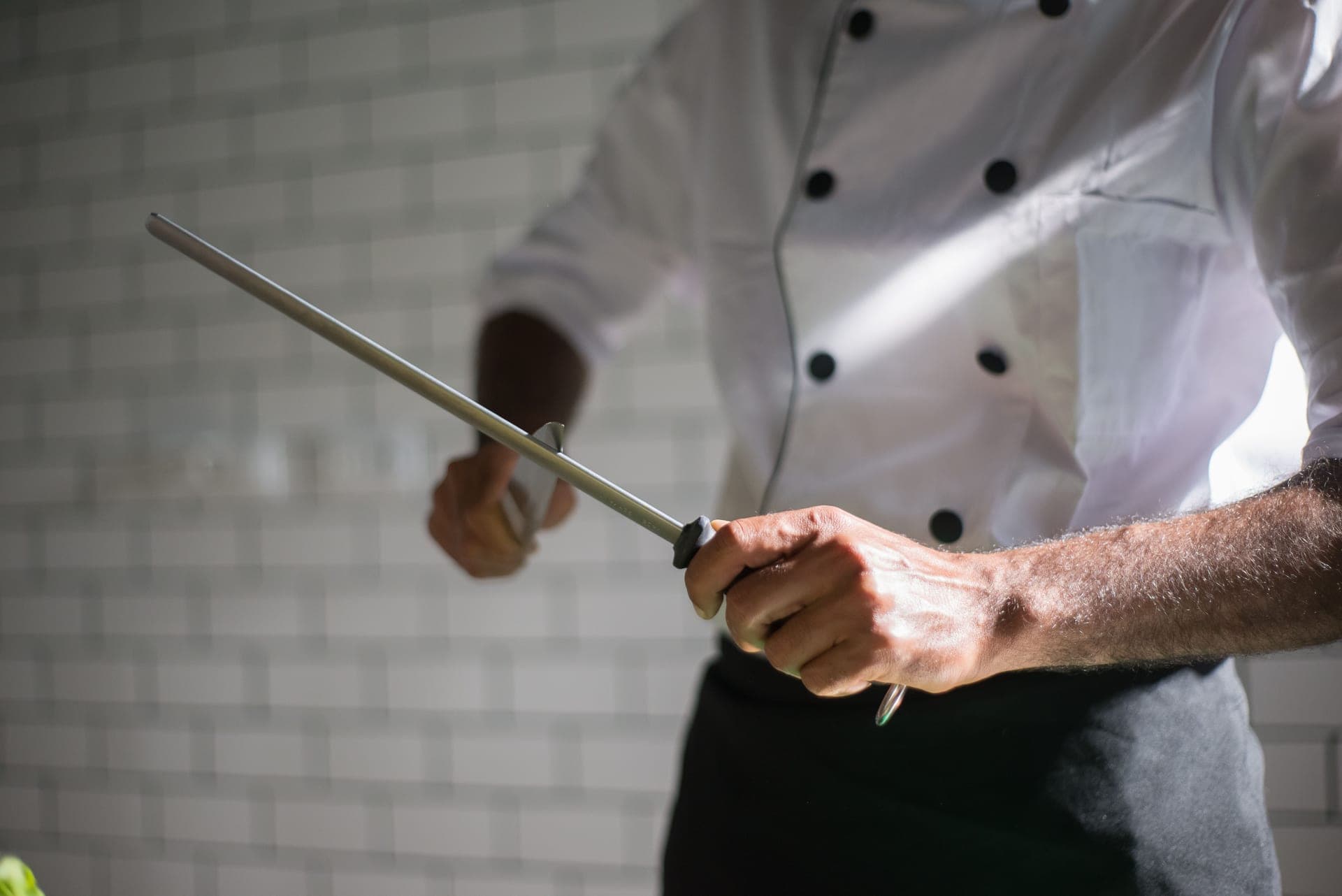
Honing Steel vs Sharpening Steel
Two names, usually one tool, and a genuine second tool hiding among them. Which is which decides whether you're maintaining a knife or grinding it away.
1000 vs 6000 Grit Whetstone
One of these makes your knife sharp. The other makes it feel nicer doing it. Confusing them is why a sharpening session ends in a dull knife.
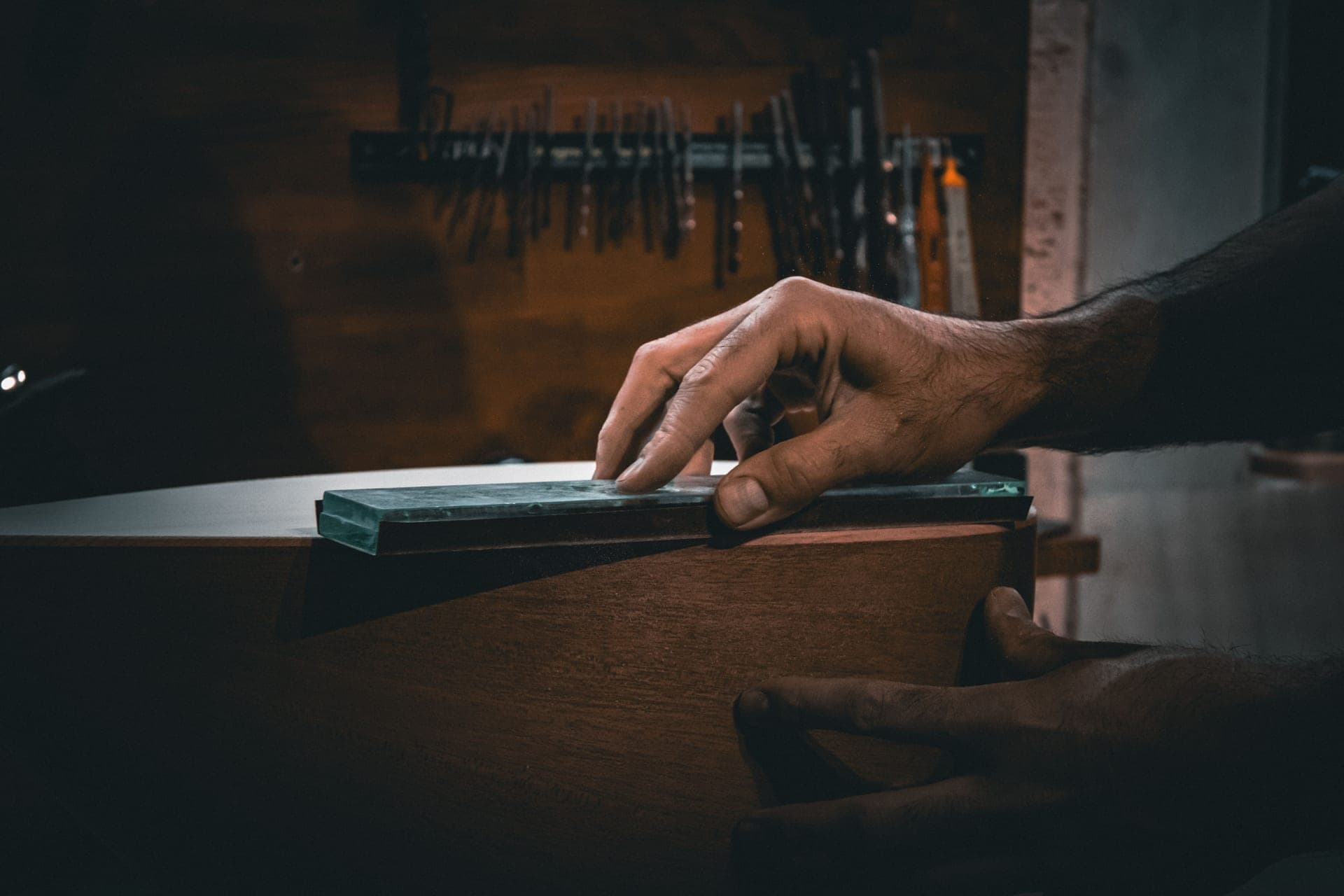
Diamond Stone vs Whetstone
A diamond plate stays flat forever and cuts anything; a water stone finishes finer and costs a third as much. Plenty of people end up owning both.
Shun vs Miyabi
Two Damascus-clad knives made in the same Japanese city at nearly the same hardness. The edge angle, the bolster and what each maker will put in writing are what actually separate them.
FC61 vs VG10
Miyabi's fine-carbide steel against the Japanese standard. What each maker publishes, what 'fine carbide' actually changes at the edge, and which to buy for how you sharpen.
Our top pick
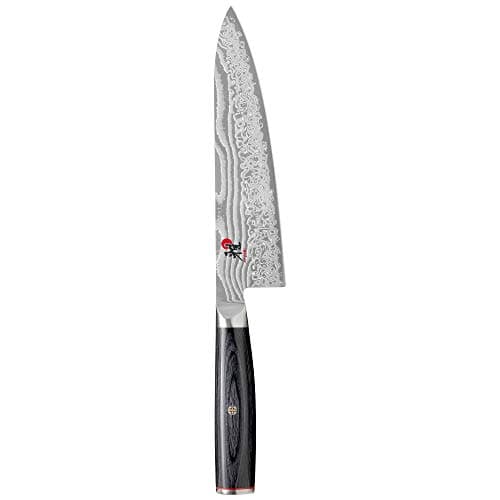
Miyabi Kaizen II 8-inch Chef's Knife
$169.95 · View on AmazonPrice as of October 20, 2026. #ad How we’re funded
Work Sharp Precision Adjust vs Lansky Deluxe Diamond
Two clamped guided systems, one real difference: a dial that sets any angle from 15 to 30 degrees against four fixed guides starting at 17. Which matters depends on what you own.
Our top pick
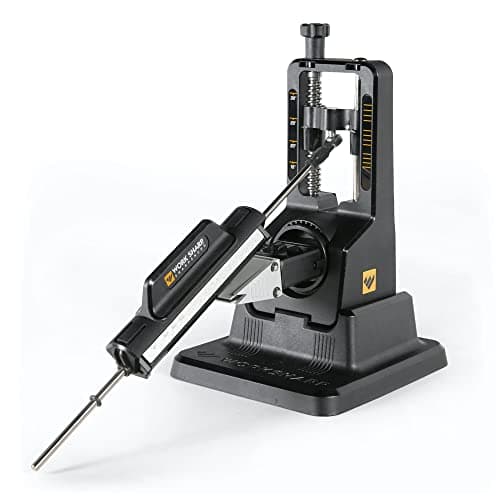
Work Sharp Precision Adjust Knife Sharpener
$69.95 · View on AmazonPrice as of October 20, 2026. #ad How we’re funded
Petty vs Utility Knife
Two names for one size class, so the word on the box tells you nothing. What actually differs: hardness, edge angle and thinness behind the edge.
Our top pick
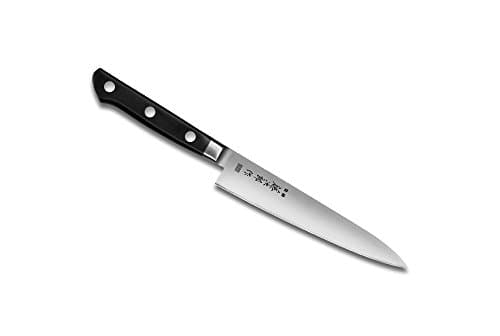
Tojiro DP Petty 150 mm (F-802)
$89.00 · View on AmazonPrice as of October 20, 2026. #ad How we’re funded
Kiritsuke vs Chef Knife
A chef’s knife with the curve taken out and the tip sheared off at an angle — and, in Japan, usually a single bevel. What that changes, and who should buy which.
Our top pick
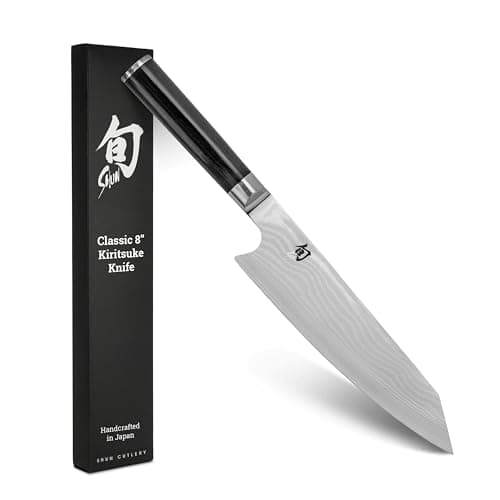
Shun Classic 8-inch Kiritsuke
$199.72 · View on AmazonPrice as of October 20, 2026. #ad How we’re funded
Bunka vs Santoku
The same size class, the same steels, one difference: whether the front of the blade comes to a point you can use. What that costs in chip risk and in price.
Our top pick
Tojiro DP Santoku 170 mm
$122.00 · View on AmazonPrice as of October 20, 2026. #ad How we’re funded
Mercer vs Wüsthof
Both forged, full tang, bolstered. Wüsthof publishes 58 Rockwell and a 14-degree edge; Mercer's own listings publish no hardness and no steel grade at all.
Our top pick
Mercer Culinary Genesis 8-inch Chef's Knife
$40.89 · View on AmazonPrice as of October 20, 2026. #ad How we’re funded