Japanese Knife Buying Guide
What to optimize for, in the order that matters — so you can spend $80 or $250 and know exactly what the extra money is, and isn't, buying.
How this is funded: we earn a commission if you buy through our links, at no extra cost to you. As an Amazon Associate we earn from qualifying purchases. It never changes which knife we recommend, and we’ll tell you when we’d skip one. Full disclosure.
Buying a Japanese knife is easy to get wrong, because the thing most buyers look at — the mesmerizing Damascus pattern — is the thing that matters least. This guide walks the factors in the order they actually affect the cut, so you can set a budget and spend it where it counts. The one-line version: prioritize steel and hardness, then geometry, then handle and size — and treat the pattern as free decoration you either want or don’t.
1. Steel and hardness (this is most of the knife)
A knife is its edge, and the edge is its steel. The steel grade tells you what the blade is capable of; the hardness — measured on the Rockwell C scale (HRC) — tells you how that potential is dialed in. Japanese knives typically run 58–62 HRC, harder than a Western knife’s 55–58. Harder steel holds a keener edge longer, but is more brittle and can chip. For most people a stainless steel like VG10 or VG-MAX around 60–61 HRC is the sweet spot: keen, durable enough, and corrosion-resistant. Our steel and hardness guide breaks down each common steel and what it’s like to live with.
The trap here is unnamed steel. A listing that says only “high carbon stainless steel” with no grade and no HRC is telling you it has nothing specific to boast about. A knife that names its steel (VG10, AUS-10, X50CrMoV15) and states a hardness is one whose maker is willing to be measured. That single filter — named steel, stated hardness — rules out most of the junk.
2. Geometry (why two knives with the same steel cut differently)
Two knives can share a steel and hardness and still cut very differently, because of how they’re ground. A thin blade with a low edge angle (Japanese knives are often around 15° per side or less) slips through food with little resistance; a thicker, wider-angled edge wedges. Geometry is why a gyuto feels keener than a Western chef’s knife even at the same sharpness. You can’t easily read exact geometry from a listing, but blade thickness at the spine, a flat-ish grind, and a stated edge angle are good signs. Profile matters too — a gyuto is flatter than a Western knife, which suits push-cutting; see our gyuto vs chef knife comparison.
3. Handle and size
Japanese knives come with two handle styles: a traditional wa handle (light, often octagonal or D-shaped, wood) and a Western yo handle (heavier, riveted, more familiar to most cooks). Neither is better; it’s preference and balance. If you can, hold both. For size, a 210mm gyuto is the default all-purpose length; drop to 180mm for small kitchens, go 240mm for big hands and boards, or choose a 170mm santoku if you push-cut more than you slice.
4. Stainless vs carbon, and bevels
Most people should buy stainless. Carbon steels (White #2, Blue #2) take an even keener edge and sharpen more easily, but they rust fast if left wet and develop a patina — only worth it if you enjoy wiping the blade dry after every use. And for a general knife, buy a double bevel (sharpened both sides, works in either hand). Single-bevel knives are specialist sushi tools; they’re not a first Japanese knife.
5. Budget: what each tier buys
- $80–$150: a named stainless steel at a real hardness — the value sweet spot. The Tojiro DP lives here and gives you 90% of the performance of knives costing three times more.
- $150–$250: nicer finish, Damascus cladding, premium handles, and sometimes a slightly harder or more exotic steel. Genuinely lovely, mostly not a better cut. The Shun Classic and Miyabi Kaizen II sit here.
- $250+: boutique steels (SG2/R2 powder steel), hand-finishing, and collector appeal. Buy at this tier because you want it, not because you need it to cut well.
Where to buy, and avoiding fakes
Stick to established brands and reputable sellers. Counterfeit Shuns and Miyabis do circulate; buying from the brand’s own listings or a trusted retailer avoids them. On our roundups, every pick links through to a live retailer listing with a current price, so you’re seeing what a knife actually costs today rather than a stale number.
There is more to this than “buy from a good shop.” Where to buy a Japanese chef knife compares the four channels properly — marketplace, brand or authorized dealer, specialist retailer and direct from Japan — on what each one does to your price, your warranty position and your counterfeit risk, and covers the seller check that takes five seconds on a marketplace listing.
Which knives, and in what order
Everything above is about choosing well inside one knife. The other half of the question is which knives to own at all, and that has a shorter answer than most people expect: a 210 mm gyuto, then a 135–150 mm petty, then a nakiri only if you prep vegetables in volume. Buying out of that order is how people end up with three blades that all do the same job. The sequence, with named models at each tier, is in your first Japanese knife.
Our picks by budget
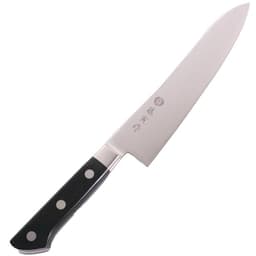
Best value — start here
Tojiro DP Gyuto 210 mm
The knife the internet has recommended to first-time gyuto buyers for a decade, and the numbers explain why: a real VG10 core at ~60 HRC for a fraction of the boutique price. Buy this before you spend three times as much.
See all Japanese picksPrice as of October 20, 2026. #ad How we’re funded
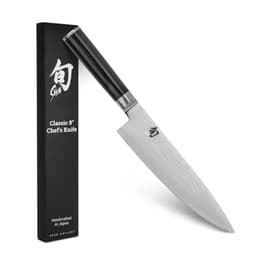
Premium — if you want the finish
Shun Classic 8-inch Chef's Knife
The knife most people picture when they think 'nice Japanese knife': a VG-MAX core at ~61 HRC under 34 layers of Damascus cladding, with a slim D-shaped handle. You pay for the finish, but the steel is genuinely hard.
See all Japanese picksPrice as of October 20, 2026. #ad How we’re funded
Frequently asked questions
How much should I spend on a Japanese chef knife?
Around $100-$150 gets you a genuinely good Japanese knife with a named steel and a known hardness, like the Tojiro DP. Under $80, you start trusting unverified 'high carbon' marketing. Over $200, most of the extra buys finish (Damascus cladding, premium handles) rather than a materially better cut. Spend where the steel and geometry are, not the pattern.
Is Damascus steel worth it on a kitchen knife?
Mostly it's cosmetic. The wavy 'Damascus' pattern is decorative cladding wrapped around a hard cutting core — it's the core steel (VG10, VG-MAX, SG2) that does the cutting, and you can buy that same core without the pattern for less. Damascus looks beautiful and adds a little corrosion resistance from the softer jacket, but it doesn't make a knife cut better.
Should I get stainless or carbon steel?
Stainless (VG10, VG-MAX, AUS-10) for almost everyone — it takes a keen edge and shrugs off a wet kitchen. Carbon steels (White #2, Blue #2) can get even sharper and are easier to sharpen, but they rust in minutes if left wet and develop a patina. Choose carbon only if you'll wipe the blade dry after every use and enjoy the upkeep.
What size Japanese knife should I buy first?
A 210mm gyuto is the standard all-purpose size and the best first Japanese knife for most people. Go 180mm if a full-length blade feels unwieldy or your board is small; 240mm if you have big hands and lots of counter space. A 170mm santoku is a good alternative if you push-cut more than you slice.
Single bevel or double bevel?
Double bevel for a general kitchen knife — it's sharpened on both sides, works in either hand, and is what every gyuto and santoku here is. Single-bevel knives (yanagiba, deba, usuba) are specialist tools for sushi and specific tasks; they're sharper for their job but harder to use and to sharpen, and are handed (right or left). Start double-bevel.
Sources
- Japanese kitchen knife — Wikipedia — Reference on gyuto/santoku/nakiri, single- vs double-bevel (kataba/ryoba) and edge angles (accessed July 21, 2026)
- Rockwell hardness test — Wikipedia — Definition of the Rockwell C (HRC) scale used to state knife-steel hardness (accessed July 21, 2026)
- Rockwell Hardness — an overview (ScienceDirect Topics) — Reference overview of Rockwell indentation hardness measurement (accessed July 21, 2026)
Per-knife specs (steel, HRC, blade length, geometry) are read from each maker’s spec sheet or product listing and dated on the individual review cards above. “Not published” means the manufacturer does not state that figure — we flag it rather than guess.
Keep reading
Are Japanese Knives Worth It?
Before the buying guide: the four costs, and the cheapest way to find out.
Read the answerBest Japanese Knife Sets
Buying two or three knives at once — which sets publish their hardness, and which pieces are not knives.
See the setsHow to Tell If a Japanese Knife Is Good Quality
Seven checks you can run from the listing before you spend a cent.
Read the checklistYour First Japanese Knife
The other half of the decision: which knives to buy, and in what order.
See the buying pathKnife Steel & Hardness Guide
The deeper reference on steel grades and HRC.
Understand the steelBest Japanese Chef Knives
Our ranked gyuto picks, with live prices.
See the gyutosGyuto Knife Guide
The Japanese chef's knife in depth.
Read the guideBest Whetstones
A Japanese edge needs a stone to stay keen.
See the stonesKitchen Knife Brands Explained
Who makes what, and each brand's house steel.
See the brandsKnife Care & Storage
Choosing a knife you'll be willing to look after.
Read the care guideChef Knife Size Guide
The length decision, in one table.
Read the guideDamascus Steel Explained
How to avoid paying for a pattern by mistake.
Read the guideHow Much Should a Chef Knife Cost?
The budget half of the decision, tier by tier.
See what to spend