Kitchen Knife Brands Explained
Who actually makes what, which house steel each brand builds on, and how to read a brand name as a specification rather than a badge.
How this is funded: we earn a commission if you buy through our links, at no extra cost to you. As an Amazon Associate we earn from qualifying purchases. It never changes which knife we recommend, and we’ll tell you when we’d skip one. Full disclosure.
A brand name is a useful shorthand only if you know what it actually stands for. Most kitchen knife makers have a house steel, a house hardness and a house grindthat barely change across their range, so once you know a brand’s defaults you can predict how any knife of theirs will behave. This page is that shorthand.
The Japanese makers
Tojiro
The value benchmark. Tojiro’s DP line puts a genuine VG10 core at around 60 HRCin a plain three-layer stainless-clad body with a composite Western handle, and sells it for a fraction of what the Damascus brands charge. Almost all the money goes into the blade. Fit and finish is functional rather than lovely — the spine sometimes wants a minute with sandpaper — and nobody buys one for the shelf appeal. If someone asks for the most cutting performance per dollar in Japanese steel, this is the answer. See the Tojiro DP review.
Shun (Kai)
The premium line of Kai Corporation, made in Seki. The Classic series is the recognizable one: a VG-MAX core at ~60–61 HRCunder 34-layer Damascus cladding, a slim pakkawood D-handle, and a hand-finished edge around 16° per side. Shun is the brand people picture when they picture a nice Japanese knife, and the premium is genuinely for finish rather than performance. The D-handle is contoured for right hands, which is worth knowing before you buy or give one. Full analysis in the Shun Classic review.
Miyabi (Zwilling)
Zwilling’s Japan-made line, also from Seki. This confuses people: a Miyabi is a Japanese knife with Japanese steel and Japanese grinding that happens to be sold by a German company. The Kaizen II range uses an FC61 core at ~60 HRCunder 48-layer Damascus, with a rounder, fuller pakkawood D-handle than Shun’s. If a Shun handle feels thin in your palm, this is the one to try next.
MAC
The professional’s quiet choice. MAC grinds its molybdenum-vanadiumblades thinner than almost anyone, and thin is the single most underrated variable in how a knife feels going through food. Plain looks, no Damascus, no marketing story — and a devoted following among working cooks. MAC does not publish a per-model hardness for much of its range, which we flag rather than guess at.
The German makers
Wüsthof
Solingen, family-owned, and the reference point for “a proper German knife”. The Classic line is fully forged X50CrMoV15 at ~58 HRC with a full tang, a half bolster and a triple-riveted POM handle, weighing around 250 g in the 8-inch. The important modern update: current Classic knives ship with a grind around 14° per side, not the traditional 20 — so do not sharpen one at 20 out of habit. See the Wüsthof Classic review.
Zwilling J.A. Henckels — and HENCKELS
The most confusing naming in the category, so be careful. Zwilling (two-figure logo) is the premium line, largely made in Germany, forged, ice-hardened, around 57 HRC. HENCKELS (single-figure logo, historically “International”) is the value sister brand: usually stamped, often made outside Germany, and frequently without a published hardness figure. Both are legitimate at their price points; buying one while believing you bought the other is the problem.
The value makers
Victorinox
Swiss, best known for the pocket knives, and the maker of the single best cheap kitchen knife in the world. The Fibrox Pro line is stamped X50CrMoV15 at ~55–56 HRC with a molded thermoplastic handle that grips when wet. Light, thin, forgiving, replaceable, and the knife we recommend more often than any other. See the Fibrox review.
Mercer Culinary
An American commercial-kitchen supplier, and the reason a lot of culinary students own a forged knife. The Genesis line is forged X50CrMoV15 at ~58 HRC with a full tang, a bolster and a grippy Santoprene handle, at a price where nearly everything else is stamped. Workmanlike finish, no charm, remarkable value.
Dexter-Russell
The oldest American cutlery maker, supplying restaurant and butcher kit rather than home cooks. Simple high-carbon and stain-free steels, hardwood or molded handles, no pretense. Their Chinese chef’s knife is the cheapest genuinely good knife we feature; see chef knife vs cleaver.
The house specs, side by side
| House steel | Typical hardness | Character | |
|---|---|---|---|
| Tojiro (DP) | VG10 core, 3-layer clad | ~60 HRC | Value; plain finish |
| Shun (Classic) | VG-MAX core, Damascus clad | ~60-61 HRC | Premium finish; D-handle |
| Miyabi (Kaizen II) | FC61 core, Damascus clad | ~60 HRC | Shun rival; fuller handle |
| MAC | Molybdenum-vanadium | Not always published | Thin grind; pro favorite |
| Wüsthof (Classic) | X50CrMoV15, forged | ~58 HRC | Heavy; ~14° modern grind |
| Zwilling (Pro S) | Special-formula stainless | ~57 HRC | Ice-hardened; full bolster |
| HENCKELS | German stainless type | Often not published | Value sister brand; stamped |
| Victorinox (Fibrox) | X50CrMoV15, stamped | ~55-56 HRC | Light, cheap, forgiving |
| Mercer (Genesis) | X50CrMoV15, forged | ~58 HRC | Forged at a stamped price |
How to read a brand you don’t recognize
The list above is not exhaustive and new names appear constantly. Three questions sort the real makers from the marketing:
- Do they name the steel?“High carbon stainless” and “Japanese steel” are not steel grades. VG10, VG-MAX, AUS-10, FC61, X50CrMoV15, SG2, White #2 — those are.
- Do they publish a hardness? A maker confident in its heat treatment states the HRC. A maker that will not is telling you something.
- Is the marketing about the blade or the photograph?If the listing sells a hammered finish, a “67-layer Damascus” count and a gift box, and mentions no grade or hardness anywhere, you are buying a picture.
That test is exactly the filter we apply before a knife appears anywhere on this site — the full version is on our methodology page, and the steel names are decoded in the steel and hardness guide.
Knowing the maker is half of it; knowing who is selling you the maker’s knife is the other half. The brands with the strongest recognition are the ones worth counterfeiting, and warranty cover can hang on which shop you bought from — where to buy a Japanese chef knife covers what each channel actually guarantees.
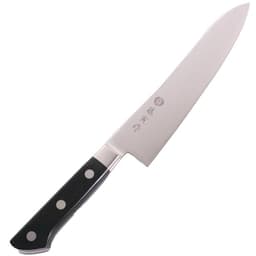
The Japanese value benchmark
Tojiro DP Gyuto 210 mm
The knife the internet has recommended to first-time gyuto buyers for a decade, and the numbers explain why: a real VG10 core at ~60 HRC for a fraction of the boutique price. Buy this before you spend three times as much.
Read the full reviewPrice as of October 20, 2026. #ad How we’re funded
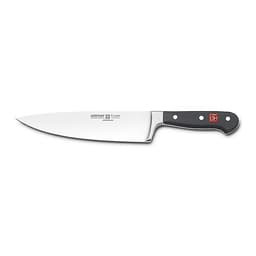
The German benchmark
Wüsthof Classic 8-inch Chef's Knife
The benchmark forged German chef's knife: a full-tang X50CrMoV15 blade at ~58 HRC with a bolster and heft that many cooks prefer for rock-chopping. Heavier and softer than a gyuto, and built to last decades.
Read the full reviewPrice as of October 20, 2026. #ad How we’re funded
Frequently asked questions
What is the best kitchen knife brand?
There isn't one, because the brands optimize for different things. For value in Japanese steel, Tojiro. For a premium Japanese knife you enjoy looking at, Shun or Miyabi. For cutting feel over finish, MAC. For a forged German knife, Wüsthof or Zwilling. For the best cheap knife anywhere, Victorinox. Pick the trade-off first and the brand follows.
Is Miyabi the same company as Zwilling?
Miyabi is Zwilling J.A. Henckels' Japan-made line, produced in Seki. So a Miyabi is a Japanese knife with Japanese steel and Japanese grinding, sold by a German company. It is not a German knife with Japanese styling, which is the usual assumption.
What is the difference between Zwilling and HENCKELS?
They are sister brands under the same parent. Zwilling (the two-figure logo) is the premium line, largely made in Germany; HENCKELS (the single-figure logo, sometimes marketed as 'International') is the value line, often made elsewhere and usually not forged. The names are similar enough that shoppers regularly buy one thinking it is the other.
Is Shun a Japanese brand?
Yes. Shun is the premium kitchen line of Kai Corporation, made in Seki, Japan. The Classic series uses a VG-MAX core with Damascus stainless cladding and a pakkawood D-handle, and it is the range most people picture when they picture a Japanese knife.
Why do some brands not publish a hardness figure?
Sometimes because the number is unremarkable and stating it would invite comparison; sometimes because the maker sources blades from multiple factories and cannot guarantee consistency. Either way, a missing hardness figure is information. We mark those cells 'Not published' rather than guessing, and we treat it as a mark against the product.
Sources
- Japanese kitchen knife — Wikipedia — Reference on gyuto/santoku/nakiri, single- vs double-bevel (kataba/ryoba) and edge angles (accessed July 21, 2026)
- Rockwell hardness test — Wikipedia — Definition of the Rockwell C (HRC) scale used to state knife-steel hardness (accessed July 21, 2026)
Per-knife specs (steel, HRC, blade length, geometry) are read from each maker’s spec sheet or product listing and dated on the individual review cards above. “Not published” means the manufacturer does not state that figure — we flag it rather than guess.
Keep reading
How to Tell If a Japanese Knife Is Good Quality
The listing-level checks that separate a real maker from a label.
Read the checklistKnife Steel & Hardness Guide
The steels these brands are built on.
Understand the steelJapanese vs German Knives
The tradition-level version of this decision.
Compare the twoBest Chef Knives
The brands above, ranked on their actual specs.
See the picksJapanese Knife Buying Guide
Steel, hardness, geometry, handle, budget.
Read the guideTojiro vs Shun
Two of these makers, put side by side.
Compare themKnife Handle Materials
Which house handle each brand defaults to.
Read the guideZwilling Pro 8-inch Review
Zwilling's forged workhorse, examined in full.
Read the review