Why Your Knife Rusts
Brown spots are rust. Grey or blue-black is usually patina. Small dark craters you cannot polish out are pitting, and that one is permanent. Here is how to tell which you have.
How this is funded: we earn a commission if you buy through our links, at no extra cost to you. As an Amazon Associate we earn from qualifying purchases. It never changes which knife we recommend, and we’ll tell you when we’d skip one. Full disclosure.
If your knife has orange-brown spots, that is rust, it started because the blade spent time wet, and it will come off with a mild abrasive and a cork. If the marks are grey, blue or black and evenly spread, that is almost certainly patina, it is protective, and you should leave it alone. If polishing a brown spot reveals a tiny crater, that is pitting — the steel in that spot is gone for good, and the only question left is whether it is near the edge.
The reason this surprises people is the word “stainless.” Stainless knife steels resist corrosion because of their chromium content, which forms a thin passive oxide film over the surface. That film is tough but not indestructible, and a kitchen attacks it from four directions at once: salt, acid from citrus and tomato, chlorides in tap water and detergent, and time spent wet. Every brand on this site, from a $30 stamped blade to a Damascus-clad Shun, is subject to it.
Identify what you have, in thirty seconds
- Orange-brown, loose, patchy, spreading — rust. Iron oxide sitting on the surface. It typically starts at a microscopic scratch or at the edge, which is the thinnest and most exposed steel on the knife. Remove it.
- Grey, blue, purple or black, even, stable — patina. A different, denser oxide that forms when steel reacts with food acids, particularly on carbon steel and on exposed carbon cores. It is doing the job chromium does on a stainless blade. Leave it.
- Dark pinpoints that stay after polishing — pitting. Corrosion that has eaten into the steel rather than sitting on it. The surface cannot be restored; you can only stop it spreading. Pits along the edge are the serious case, because a pitted edge chips where the craters are.
- A dull grey haze over the whole blade — usually detergent etching. The signature of dishwasher exposure rather than of standing water, and often accompanied by a cloudy bolster.
The five causes, in order of how often they are the answer
1. The knife was left wet.In the sink, on a wet board, in a drying rack with water pooling against the blade, or wiped with a cloth that was already damp. This is the cause most of the time, and it is why every maker’s care instruction says the same thing. ZWILLING’s own guidance is to clean a knife “by hand using lukewarm water, mild dish soap and a non-scratch cloth or sponge,” then dry it with “a plain dishtowel or microfiber cloth.” The drying step is not politeness; it is the whole prevention strategy.
2. The dishwasher.Hot water, a chloride-bearing detergent and an hour of exposure, plus physical contact with other metal. ZWILLING rules it out explicitly, citing “aggressive chemical tablets,” “high temperatures” and “bumps and bangs with other objects,” and states that wooden-handled knives are “not dishwasher-safe and should only be washed by hand.”
3. Acidic and salty food left on the blade. Tomato, lemon, onion, brine, mustard. Cutting them is fine; leaving the residue on the steel for an hour is what starts the spot. Rinse and dry between tasks if you are breaking down a lot of acidic produce.
4. Storage against other metal, or in a damp drawer.Blade-to-blade contact scratches the passive layer and traps moisture at the contact point. ZWILLING’s own storage line is that a knife needs “its very own space away from other objects, so not simply thrown in the cutlery drawer” — a block, drawer organizers or protective sleeves.
5. The steel is carbon, or has an exposed carbon core. If your knife is White #2, Blue Super, or a carbon-cored san-mai with the core visible at the edge, it will discolor; that is the deal you made for the edge. The answer is not to fight it but to build an even patina and keep the blade dry.
How to remove it
Work along the blade, spine to edge, never across the edge, and start with the least aggressive thing available.
- Mild abrasive cleanser on a cork or a nylon pad.This is also DMT’s own recommendation for its sharpeners — water and a wipe-dry after each use, then “a mild kitchen abrasive cleanser and a nylon scrub brush” after several sharpenings. A wine cork gives you grip without scratching.
- A rust eraser (a rubber block loaded with abrasive) for spots that resist the cleanser. Keep it moving; it will leave a satin patch if you dwell.
- Your finest stone, for rust on the edge itself.If corrosion has reached the apex, sharpening is the fix — you are removing steel until you are past the damage. Our whetstone walkthrough covers the sequence, and fixing a chipped knife covers the heavier version of the same job.
- Never steel wool. It scratches the passive layer broadly and leaves iron particles on the surface, which then rust themselves.
Prevention, which takes about four seconds a knife
Rinse, dry with a towel, put it away dry and alone. That is the entire protocol, and it defeats every cause above except carbon-steel patina, which is not a problem to begin with. Do not leave a knife in the sink, do not let it air-dry against other metal, and do not use the dishwasher — no manufacturer on this site recommends it, and none will treat the result as a warranty matter. Wüsthof’s published terms, for instance, exclude “customary wear” outright. Our care and storage guide has the rest of the habits.
If you want a knife that forgives this
Three knives below, in increasing order of how much you care about the result. They are not rust-proof — nothing is — but each keeps hard, reactive steel away from the atmosphere or uses steel that shrugs the kitchen off. The Tojiro DP and the Shun Classic are both san-mai: a hard core clad in softer stainless, so the only exposed core steel is the edge itself. The Victorinox is a single soft stainless blade with nothing to go wrong, and it is genuinely the lowest-maintenance knife we recommend to anyone.
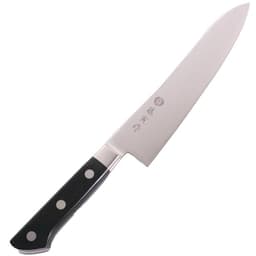
Hard edge, stainless jacket
Tojiro DP Gyuto 210 mm
The knife the internet has recommended to first-time gyuto buyers for a decade, and the numbers explain why: a real VG10 core at ~60 HRC for a fraction of the boutique price. Buy this before you spend three times as much.
Read the full Tojiro DP reviewPrice as of October 6, 2026. #ad How we’re funded
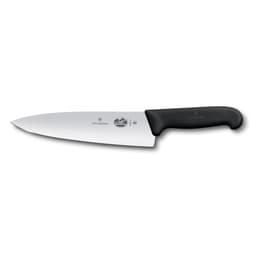
The lowest-maintenance knife we recommend
Victorinox Fibrox Pro 8-inch Chef's Knife
The knife that wins nearly every budget test, and the one to buy if you buy only one. A soft, stamped X50CrMoV15 blade at ~55-56 HRC and a grippy, non-slip handle — it dulls sooner than a hard Japanese knife but takes an edge back in seconds.
Read the full Victorinox reviewPrice as of October 6, 2026. #ad How we’re funded
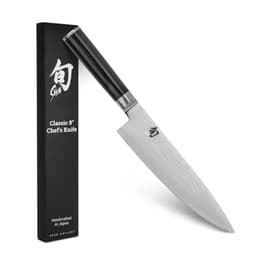
Premium, and still fully stainless
Shun Classic 8-inch Chef's Knife
The knife most people picture when they think 'nice Japanese knife': a VG-MAX core at ~61 HRC under 34 layers of Damascus cladding, with a slim D-shaped handle. You pay for the finish, but the steel is genuinely hard.
Read the full Shun Classic reviewFrequently asked questions
Why does my stainless steel knife rust?
Because 'stainless' means rust-resistant, not rust-proof. Stainless knife steels resist corrosion through their chromium content, and that protection is defeated by the ordinary conditions of a kitchen sink: salt, acid from citrus and tomato, chlorides from tap water and detergent, and above all time spent wet. A stainless blade left wet in a sink overnight can show brown spots by morning.
What are the brown spots on my knife?
Iron oxide — rust. On a stainless blade it usually means the surface sat wet, often in contact with salt or acidic food, long enough for corrosion to start at a microscopic scratch. Fresh brown spots sit on the surface and wipe off with a mild abrasive. If a spot leaves a tiny crater behind after you polish it, that is pitting and the steel is gone there.
What are the black spots on my knife?
Usually patina rather than rust, especially on a carbon-steel or carbon-cored blade: a stable grey or blue-black oxide layer that forms where the steel has reacted with food acids. Patina is protective and does not need removing. The way to tell it apart from rust is color and behaviour — rust is orange-brown, loose and spreading; patina is grey, blue or black, even, and stays put.
Is it safe to use a knife with rust on it?
Clean it first. Surface rust is not a health emergency, but rust flakes do not belong in food and the corroded area will keep spreading while it is there. Remove it, dry the blade, and check whether a crater is left — a pitted edge is weaker and can chip along the pits.
How do I get rust off a knife?
Start with the gentlest thing that works: a cork or a wine cork dipped in a mild kitchen abrasive cleanser, or a nylon pad, worked along the blade from spine to edge — never across the edge. DMT recommends exactly this approach for its own sharpeners: water and a wipe-dry after each use, and 'a mild kitchen abrasive cleanser and a nylon scrub brush' after several uses. Heavier rust may need a rust eraser. Avoid steel wool, which scratches and leaves iron particles behind.
Does the dishwasher cause knives to rust?
It is one of the most reliable ways to do it. ZWILLING's own care instructions rule the dishwasher out for 'aggressive chemical tablets', 'high temperatures' and 'bumps and bangs with other objects' — the first two of those are a corrosion recipe, and the detergent is a chloride source held against hot wet steel for an hour. We cover the full case in a separate guide.
Will a maker's warranty cover rust?
No. Warranties cover defects in material and workmanship. Wusthof's published terms, for example, exclude 'customary wear' along with bent tips and chipped blades — corrosion from storage and washing is not a manufacturing defect. Rust is a maintenance outcome, which is the good news: it is entirely within your control.
Sources
- How to Clean and Care for Your Knife — ZWILLING — ZWILLING's own care instructions: 'clean it by hand using lukewarm water, mild dish soap and a non-scratch cloth or sponge', dried with 'a plain dishtowel or microfiber cloth'; the dishwasher is ruled out for 'aggressive chemical tablets', 'high temperatures' and 'bumps and bangs with other objects'. On wooden handles: 'not dishwasher-safe and should only be washed by hand', with the wood 'regularly treating the wood with oil (e.g. linseed oil) or wax (e.g. beeswax)'. On storage, a knife needs 'its very own space away from other objects, so not simply thrown in the cutlery drawer' — a block, 'drawer organizers or protective sleeves' (accessed September 23, 2026)
- Knife Care 101: A Guide To Maintaining Your Knife — Benchmade — Benchmade's published factory edge spec — 'most Benchmade knives are sharpened at 30-35° inclusive (about 17-20° per side)' — plus its coarse-to-fine grit and stropping guidance (accessed August 13, 2026)
- Japanese kitchen knife — Wikipedia — Reference on gyuto/santoku/nakiri, single- vs double-bevel (kataba/ryoba) and edge angles (accessed July 21, 2026)
- Shun Knives FAQ — Shun Cutlery (Kai USA) — Shun's own answers: 'Shun hardens VG10 and VG-Max steel to 60-61 Rockwell and SG2 to 61-62', 'Shun knives, for example, are sharpened to a 16 degree angle on each side of the blade', and on rods, 'Please do not use a diamond steel for regular honing. Diamond steels are for sharpening and will remove metal from your knife before it is necessary' (accessed August 28, 2026)
- Limited Lifetime Warranty Policy Details — WÜSTHOF — Wüsthof's published warranty terms: cover for the initial purchaser or gift recipient, and the exclusions (bent tips, chipped blades, honing steels, customary wear, commercial or educational use) (accessed August 13, 2026)
- Rockwell hardness test — Wikipedia — Definition of the Rockwell C (HRC) scale used to state knife-steel hardness (accessed July 21, 2026)
- DMT FAQ — DMT Diamond Sharpeners — DMT's own answers: on break-in, 'the diamond surface will seem aggressive in nature; the diamond sharpener will smooth after initial sharpening with no impact to long term performance. Your first few sharpenings are the break-in period'; 'DMT recommends you use DMT products dry or with water only'; care is to 'clean after each use with water and wipe dry' and 'After several sharpenings, use a mild kitchen abrasive cleanser and a nylon scrub brush'; on life, DMT sharpeners 'do not last forever, but they last for several years'; the polka-dot surfaces are 'slightly recessed' so debris falls away while Dia-Sharp's 'continuous diamond surface' suits 'small-pointed tools'; DMT recommends 'sharpening at a 20-degree angle' and notes 'sharpening at the proper angle is not as important as sharpening at a constant angle'; and the guarantee: 'If your product fails to perform due to defects in materials or workmanship, we will replace it regardless of age' (accessed September 18, 2026)
Per-knife specs (steel, HRC, blade length, geometry) are read from each maker’s spec sheet or product listing and dated on the individual review cards above. “Not published” means the manufacturer does not state that figure — we flag it rather than guess.
Keep reading
Knife Care and Storage
The habits this page's prevention section comes from, in full.
Read the guideKnives in the Dishwasher
Why the machine is the single worst thing you can do to a blade.
Read the verdictCarbon vs Stainless Knives
The buying decision behind all of this — and what patina is for.
Compare themKnife Steel and Hardness Guide
What VG10, X50CrMoV15 and HRC actually mean on a spec sheet.
Read the guideHow to Fix a Chipped Knife
If pitting has already taken a bite out of your edge.
Fix the edgeBest Japanese Chef Knives
Stainless-clad gyutos that keep the hard core away from moisture.
See the picks