Gyuto Club

Enso HD 7-Piece Block Set Review

The only Japanese set we cover where the hardness, the layer count and the edge angle are all published for the set itself. That is rarer than it sounds — and the 12-degree figure is the one to think hardest about.

By Stephen V.Last updated How we pick

How this is funded: we earn a commission if you buy through our links, at no extra cost to you. As an Amazon Associate we earn from qualifying purchases. It never changes which knife we recommend, and we’ll tell you when we’d skip one. Full disclosure.

Buy this set if you want one complete Japanese kit, you are done buying knives, and you will keep it on a water stone. Do not buy it if your cooking involves bone, frozen food or fruit pits, or if you expect to add a knife later. The reason to recommend it is unusual for a block set: Enso publishes the numbers.

The published HD line specification is a “VG10 stainless steel core. 61 Rockwell.” under “37-layer Damascus with a hammered tsuchime finish,” on a triple-riveted canvas micarta handle, made in Seki, Japan, and the set carries an approximately 12° hand-ground edge. Three numbers — hardness, layer count and edge angle — stated for the set itself. Across every Japanese set we have looked at, that is the exception. Shun publishes no Rockwell figure on any product page (its 60–61 HRC lives in its FAQ). MAC publishes no steel grade, no hardness and no edge angle for its three-piece set at all. Mercer’s own Genesis set listing prints “German stainless steel blades,” a full tang and NSF certification, and no Rockwell figure anywhere.

We have not cut with this set — we own none of these knives, and our methodology page sets out what we do instead. What follows is the published specification, read against the rest of the field.

What is actually in the box

Five knives, take-apart kitchen shears, and a six-slot birch block, with the assembled block measuring 12 x 3 x 14.5 inches:

  • 4-inch paring knife— the in-hand knife, for peeling and coring.
  • 6-inch utility — the petty slot. Our petty guide explains why this is the second knife most kitchens actually reach for.
  • 6.5-inch santoku — the short, flat chopper. See the santoku guide.
  • 8-inch chef’s knife— the knife that does most of the work.
  • 9-inch bread knife— serrated, and the one piece you cannot maintain on a flat stone. Our serrated sharpener roundup covers what it needs.

Count the shapes that are filler: none. That is the test a set has to pass, and most fail it. A 15-piece block is typically five knives and eight steak knives; a six-piece block from a premium maker often contains three knives and counts the block and a rod toward the number. Here the piece count and the blade count differ by exactly the shears.

One deliberate omission: there is no honing rod. We consider that correct rather than cheap. The grooved steel that comes in most Western blocks is the wrong tool for a 61 HRC edge, and Yoshihiro’s own instruction for its VG10 Damascus line is explicit about the class — whetstones only, no honing rods. What you should budget for instead is a 1000/6000 combination stone and, if you want a ten-second daily habit, a fine ceramic rod. Shun’s FAQ makes the related point about the wrong rod: “please do not use a diamond steel for regular honing. Diamond steels are for sharpening and will remove metal from your knife before it is necessary.”

The 12-degree question

This is the specification that should decide your purchase. An approximately 12° per-side hand-ground edge is more acute than anything else we cover in a set: Shun publishes 16° per side on the Classic line, our VG10 gyutos sit near 15°, and a German chef’s knife is ground near 20°. Thinner geometry at the apex means less force per cut and a cleaner release through dense produce.

It also means less steel behind the edge. Hardness and toughness trade against each other — at 61 HRC on the Rockwell C scale, this edge chips where a German edge at 58 would roll, and a 12° bevel gives it less support than a 16° one. In practice the rules are specific rather than vague: nothing frozen, no bones or joints, no fruit pits, no twisting the blade in a cut, and never scraping the board with the edge (turn the knife over and use the spine). Our honest assessment of hard Japanese steel goes through who should and should not take that deal.

How it compares with the sets we rate against it

Enso HD 7-piece against two rival block sets, on what each maker or listing publishes
 Enso HD 7-pieceShun Classic 6-piece blockMercer Genesis 6-piece
Knives in the box5 + shears35
Core steelVG10VG-MAXGerman stainless (grade not printed)
Published hardness61 HRC (line spec)Not on product pages (60-61 in FAQ)Not published
Published edge angle~12° per side, hand-ground16° per sideNot published
Cladding37-layer hammered DamascusDamascus (69 layers on the 8-inch)None — forged single steel
HandleCanvas micarta, triple-rivetedPakkawood, D-shapeSantoprene, non-slip
Made inSeki, JapanSeki City, JapanNot stated on the listing
Block slots6 — set fills all 6Block includedBeech and tempered glass
DishwasherHand wash onlyHand wash onlyHand wash only (listing)

Read across that table and the pattern is clear. The Shun is a better-supported brand with a published service and warranty program and a more forgiving 16° edge, but the block version gives you three knives and no Rockwell figure on the product page. The Mercer is forged, NSF-certified, grippy and cheap, and publishes almost nothing about its steel. The Enso is the only one of the three that tells you what you are buying at the level of hardness, layers and angle. The full field is in our Japanese knife set roundup, where this set is the top pick.

The three things we would change

1. The block is full on day one. Six slots, six pieces. If you later want a nakiri, a petty at a different length or a sujihiki, it lives in a drawer or on a magnetic strip. For a cook who is done buying, that is tidy; for anyone who is going to keep exploring shapes, it is a real constraint and the reason some people should buy two knives and a universal block instead.

2. The provenance is thinner than the specification.Enso is sold in the US as an exclusive line through a single distributor, and there is no manufacturer website publishing this seven-piece configuration independently. The line specification and the retail listing agree, and the knives are made in Seki — but if you like being able to check a set against the maker’s own spec sheet, as you can with Shun’s DMS sets, this is a step down in verifiability even though it is a step up in disclosed numbers.

3. No stone in the box. Given that the correct maintenance for this steel is a water stone, and given that the set deliberately omits the wrong tool (a grooved rod), a 1000/6000 stone would have completed it. Add one from our combination stone roundup and treat it as part of the purchase price.

The verdict

The best-documented Japanese set we cover, and a genuinely good one: five knives with no filler, a hard VG10 core at a stated 61 HRC, 37 hammered Damascus layers, an unusually acute hand-ground edge, canvas micarta handles that keep their grip wet, and a lifetime warranty. It asks for care in return — hand washing, stone maintenance, and discipline about what you cut — and it arrives with its block already full. If that matches how you cook, nothing else in this price class tells you as much about itself before you buy. The live price and image on the card above are read fresh from our price layer and carry the date they were checked; we never quote a figure in prose.
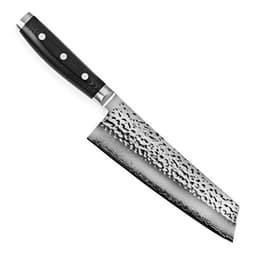
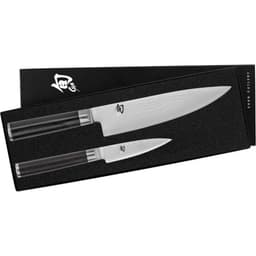
#1Reviewed here

Enso HD 7-Piece Birch Block Set

The only Japanese set we cover where the hardness, the layer count and the edge angle are all published for the set itself: a VG10 core at 61 HRC under 37 hammered Damascus layers, hand-ground to about 12 degrees, made in Seki. Five knives, shears and a six-slot birch block — and the block is full, which is a feature if you are done buying and a limit if you are not.

Strengths

  • VG10 core at a published 61 HRC, hand-ground to approximately 12 degrees
  • 37-layer hammered (tsuchime) Damascus on every blade, handcrafted in Seki, Japan
  • Five knives that earn their slot plus take-apart shears: 4-inch paring, 6-inch utility, 6.5-inch santoku, 8-inch chef's, 9-inch bread
  • Canvas micarta handles with three rivets keep their grip wet, and the set carries a lifetime warranty

Trade-offs

  • The block has six slots and the set fills all six — there is nowhere to put a knife you add later
  • No honing rod in the box, and a 61 HRC edge wants a fine ceramic rod rather than a grooved steel
  • Hand wash only, and a hard thin edge chips on bone, frozen food and fruit pits
  • Enso is a US-exclusive line through one distributor, so there is no maker's site publishing the set independently
Blade steelVG10 (stainless)
Hardness61 HRC
Blade lengthNot published
WeightNot published
Edge geometryDouble bevel, hand-ground to ~12°
HandleBlack canvas micarta, triple-riveted
ConstructionVG10 core, 37-layer hammered Damascus cladding

Specs read from the manufacturer listing, on September 29, 2026. “Not published” means the maker does not state that figure.

Enso HD 7-inch Bunka

The same steel in one knife, if a set is too much

Enso HD 7-inch Bunka

The bunka that actually publishes its numbers: a VG10 core at 61 HRC under 37 hammered Damascus layers, made in Seki. The reverse-tanto tip is the whole point of the shape, and this is the cheapest way to own one from a maker that states the hardness.

Read the bunka guide
$149.95 · View on Amazon

Price as of October 7, 2026. #ad How we’re funded

Shun Classic 2-Piece Starter Set

The two-knife alternative from a maker that publishes more

Shun Classic 2-Piece Starter Set

The Japanese equivalent of the Wüsthof pair: the 8-inch Classic chef's knife (DM0706) and the 3.5-inch paring knife (DM0700), Damascus-clad VG-MAX, to start a collection rather than fill a block. Beautiful and hard-steeled, but treat these gently — they are not for bones or frozen food.

Compare the Japanese sets
$259.95 · View on Amazon

Price as of October 7, 2026. #ad How we’re funded

Frequently asked questions

Is the Enso HD 7-piece set worth it?

If you want a complete Japanese block set and you will maintain it on stones, yes — it is the best-documented set we cover. A VG10 core at a published 61 HRC, 37-layer hammered Damascus, hand-ground to approximately 12 degrees, five knives that each earn their slot plus shears. The reservations are a full block with no room to grow, no honing rod in the box, and a US-exclusive distribution that means no maker's own site publishes the set independently.

What knives come in the Enso HD 7-piece set?

Five knives, take-apart kitchen shears and a six-slot birch block: a 4-inch paring knife, a 6-inch utility, a 6.5-inch santoku, an 8-inch chef's knife and a 9-inch bread knife. That is an unusually honest configuration — there is no filler shape in it, which is the main thing that separates a real set from a box with a block in it.

How hard are Enso HD knives?

The published figure for the HD line is a VG10 stainless core at 61 Rockwell, with 37-layer Damascus and a hammered tsuchime finish, made in Seki, Japan. For comparison, Shun's own FAQ puts VG10 and VG-MAX at 60-61 HRC, and Wusthof describes its forged German blades as 58 Rockwell and non-forged ones at 55-57. So this is at the hard end of mainstream stainless.

Is a 12-degree edge too thin for a home kitchen?

It is the most acute factory edge on this site, and that cuts both ways. A hand-ground ~12-degree bevel at 61 HRC slices beautifully and it is less tolerant of abuse than Shun's 16 degrees or a German 20. No bone, no frozen food, no fruit pits, no scraping the board with the edge. If your cooking involves any of those regularly, buy a set with more obtuse geometry.

Does the Enso HD set include a honing rod?

No, and we would not want the usual grooved steel with it anyway. At 61 HRC the edge wants a fine ceramic rod for touch-ups and a water stone for real sharpening. Yoshihiro's instruction for its own VG10 Damascus line is whetstones only and no honing rods, which tells you how this steel class is meant to be maintained. Budget for a 1000/6000 stone alongside the set.

Can Enso HD knives go in the dishwasher?

No. Hand wash and dry, every time. The handles are canvas micarta and the blades are a hard thin stainless-clad core — ZWILLING's own care guidance rules the dishwasher out for aggressive chemical tablets, high temperatures and bumps and bangs with other objects, and that reasoning applies in full here.

Who makes Enso knives?

They are made in Seki, Japan, and sold in the United States as an exclusive line through a single distributor. That is the honest provenance gap on this set: there is no maker's own website publishing this specific seven-piece configuration, so the set-level claims come from the line specification and the retail listing rather than from a manufacturer spec sheet. We flag that rather than imply maker confirmation.

Is it cheaper to buy the knives individually?

Almost never with this set, which is unusual. Because every piece in it is a knife you would plausibly buy anyway, the set does not rely on filler to justify the bundle — the comparison that matters is against a 2-piece Japanese starter set plus a block, and the Enso usually wins on cost per usable knife. Check the live prices on the cards here rather than trusting any fixed figure.

Sources

  • Enso Knives — Japanese Crafted HD, Hizashi, SG2, Hachi (Cutlery and More) — Published Enso HD line spec: 'VG10 stainless steel core. 61 Rockwell.', '37-layer Damascus with a hammered tsuchime finish', a triple-riveted canvas micarta handle, made in Seki, Japan (accessed August 18, 2026)
  • Classic 2-Piece Starter Set (DMS0220) — Shun Cutlery (Kai USA) — Shun's own page for the set names both knives — the 'Classic 8" Chef's Knife' (DM0706) and the 'Classic 3.5" Paring Knife' (DM0700) — and publishes the blade spec for them: 'VG–MAX' steel in a '69 layer Damascus' blade described as '34 layers of stainless Damascus cladding each side (68 total)', a 'razor-sharp, long-lasting 16° edge each side', 'D-shaped ebony-finished Pakkawood handles' on a 'full composite tang', 'Handcrafted in Japan' and a 'Limited Lifetime Warranty'. NO Rockwell hardness figure appears on the set page (accessed September 29, 2026)
  • Shun Knives FAQ — Shun Cutlery (Kai USA) — Shun's own answers: 'Shun hardens VG10 and VG-Max steel to 60-61 Rockwell and SG2 to 61-62', 'Shun knives, for example, are sharpened to a 16 degree angle on each side of the blade', and on rods, 'Please do not use a diamond steel for regular honing. Diamond steels are for sharpening and will remove metal from your knife before it is necessary' (accessed August 28, 2026)
  • Mercer Culinary M20050 Genesis 6-Piece Wood / Glass Knife Block Set — WebstaurantStore — The distributor listing for this set: 'German stainless steel blades with thick bolsters and full tangs', 'Ergonomic, easy-to-grip, soft Santoprene knife handles', 'Features a beech wood and tempered glass knife block' and 'Includes a paring, utility, boning, bread, and chef's knife' — itemized as a 3 1/2 inch paring, 5 inch utility, 6 inch boning, 8 inch wavy edge bread and 8 inch chef's knife in an 8 inch L x 3 1/4 inch W x 9 inch H block, blade material 'High Carbon Stainless Steel', features 'Hand Wash Only Non-Slip Handles NSF Certified'. No Rockwell hardness figure is printed (accessed August 26, 2026)
  • Yoshihiro VG-10 46 Layers Hammered Damascus Gyuto & Petty Chef's Knife Set — Yoshihiro Cutlery — Yoshihiro Cutlery's own store page for the 46-layer set, and the only place the line's hardness is published: 'VG-10 Steel', '60 HRC', 'Multi-Layer Damascus (46-Layer)', 'Double Bevel', made in 'Japan', with a saya included. The care instructions are the maker's own and matter for a hard thin edge: 'Hand wash only. Dry immediately. Avoid the dishwasher', 'Sharpen by hand using whetstones. Do not use honing rods', and avoid 'cutting on hard surfaces or using the knives on items like bones, nutshells, or frozen foods'. The handle variants shown here are rosewood and ambrosia (accessed September 29, 2026)
  • How to Clean and Care for Your Knife — ZWILLING — ZWILLING's own care instructions: 'clean it by hand using lukewarm water, mild dish soap and a non-scratch cloth or sponge', dried with 'a plain dishtowel or microfiber cloth'; the dishwasher is ruled out for 'aggressive chemical tablets', 'high temperatures' and 'bumps and bangs with other objects'. On wooden handles: 'not dishwasher-safe and should only be washed by hand', with the wood 'regularly treating the wood with oil (e.g. linseed oil) or wax (e.g. beeswax)'. On storage, a knife needs 'its very own space away from other objects, so not simply thrown in the cutlery drawer' — a block, 'drawer organizers or protective sleeves' (accessed September 23, 2026)
  • The Difference Between WÜSTHOF Forged and Stamped Kitchen Knives — WÜSTHOF — Wüsthof's own account of both processes: forged blades start as a single piece of steel heated to over 2000°F and take 'over fifty-four manufacturing steps', hardened to '58 Rockwell'; non-forged blades are 'cut from a high-quality steel sheet using a precision laser' in 'thirty-five manufacturing steps' and run 'between 55 and 57 Rockwell' (accessed August 18, 2026)
  • Rockwell hardness test — Wikipedia — Definition of the Rockwell C (HRC) scale used to state knife-steel hardness (accessed July 21, 2026)

Per-knife specs (steel, HRC, blade length, geometry) are read from each maker’s spec sheet or product listing and dated on the individual review cards above. “Not published” means the manufacturer does not state that figure — we flag it rather than guess.

Keep reading