How Long Does a Whetstone Last?
Not in years — in millimetres. A stone is a consumable block of abrasive, and the thing eating it is not your knives. It is the flattening.
How this is funded: we earn a commission if you buy through our links, at no extra cost to you. As an Amazon Associate we earn from qualifying purchases. It never changes which knife we recommend, and we’ll tell you when we’d skip one. Full disclosure.
A whetstone lasts as long as its abrasive is thick enough to be flattened, which for a home kitchen means years and usually decades — a typical combination water stone carries 20 to 25 mm of abrasive across both sides, and sharpening a few knives a month removes a vanishing fraction of that. The thing that actually consumes a stone is not your knives. It is the flattening you do to correct the hollow your knives create, which is why the stones that die young are soft stones that were allowed to dish badly before anyone touched them.
This question gets asked in the wrong unit, which is why the answers are unsatisfying. Nobody can tell you “four years” because the variables are how much steel you grind, how hard your stone is, and how competently you keep it flat. But the arithmetic is simple once you look at the right number.
The number that matters is abrasive thickness
Look at the published dimensions rather than the price. In our registry the King KW-65 combination stone is about 185 × 63 × 25 mm — a 25 mm block with a 1000-grit face on one side and a 6000-grit face on the other. The Naniwa 1000/3000 is about 183 × 63 × 20 mm. The Shapton GlassStone 1000 is about 152 × 70 × 10 mm, of which only 5 mm is abrasive— the rest is the glass plate it is bonded to.
That last figure looks alarming next to the others and mostly is not, which is the counterintuitive part. A hard ceramic stone gives up far less material per session than a soft one and dishes far more slowly, so it needs flattening less often and loses less when it does. Thickness is the fuel tank; hardness is the fuel economy. A 5 mm hard layer and a 25 mm soft block can easily outlast each other depending on which one is in whose hands.
The practical consequence for a buyer: do not pay extra for thickness on a soft learner stone. Pay for thickness if you intend to grind a lot of damaged edges, and pay for hardness if you intend to sharpen regularly for years. Our whetstone roundup lists the published dimensions for each.
Flattening is the real consumer
A water stone wears where the knife touches it, and the knife touches the middle. The general reference on sharpening stones describes exactly this — stones dish in the centre with use, which is one of the standing differences between a water stone and a diamond plate that retains its flatness. A dished stone grinds a convex bevel, which is a bigger obstacle to a sharp edge than any grit choice.
So you flatten. And flattening means removing abrasive from the whole surface until it is level with the deepest part of the hollow. The maths of that is unforgiving: a shallow hollow costs you a thin skim, while a deeply dished stone costs you the entire depth of the dish across the whole face. Two people with identical stones and identical knife counts can be a decade apart in stone life purely on flattening discipline.
Hence the single most useful habit in this article: flatten little and often. A dozen passes on a coarse diamond plate every few sessions, using a pencil grid to see when the surface is level, costs almost nothing. Waiting until the stone visibly cups costs millimetres. The routine is in how to flatten a whetstone.
The four ways a stone actually dies
- Used up. The abrasive is down to the base, the glass or the label. Rare in a home kitchen, common in a professional one.
- Dished past rescue. The hollow is deeper than you are willing to chase, so correcting it would consume most of what is left. Avoidable entirely.
- Cracked.Usually from drying unevenly after a soak, from freezing while saturated, or from being dropped. A crack that runs through the block is a retirement, not a repair — it can catch an edge mid-stroke.
- Delaminated. Combination stones and glass-backed stones are bonded assemblies, and the bond can fail. Nothing to do about it except stop using it.
Notice what is not on that list: “stopped cutting.” A stone that feels slow and glassy is nearly always glazed, loaded with metal swarf, or a soaking stone being used with surface water only — the two families behave very differently, and the published breakdown of one maker’s range shows how mixed a single catalogue can be, with some lines “soaked for several minutes” and others splash-and-go. Dress the surface, clean it, check which family it belongs to, and it will usually come back. Our soaking guide covers that, and why your knife won’t get sharp covers the diagnosis from the knife’s side.
Diamond plates fail in a completely different way
A diamond plate is not consumed by thickness, because the abrasive is a single layer of diamond bonded to a steel face. It does not dish: DMT describes its Dia-Sharp bench stones as “guaranteed not to hollow or groove,” with a “continuous diamond surface” that assures “consistent, even sharpening every time.” Flatness, in other words, is a permanent property rather than a maintenance task.
What it loses instead is aggressiveness. The tallest diamonds break off or wear down and the plate settles into a steadier, slower cut — DMT’s own FAQ frames the first few sessions as a break-in period where the surface “will seem aggressive in nature” and then “will smooth after initial sharpening with no impact to long term performance.” On lifespan it is candid: DMT sharpeners “do not last forever, but they last for several years,” with care being to “clean after each use with water and wipe dry” and, after several sharpenings, “use a mild kitchen abrasive cleanser and a nylon scrub brush.” Its guarantee covers defects in materials or workmanship “regardless of age,” which is not the same thing as covering wear.
One category straddles both worlds: a plate with a replaceable diamond sheet, like the Atoma. The plate body outlives the abrasive and you buy a new sheet rather than a new tool — which is also why it is the standard choice for flattening other stones.
| Soft water stone | Hard ceramic / glass-backed | Diamond plate | |
|---|---|---|---|
| What runs out | Abrasive thickness | Abrasive thickness, slowly | Diamond sharpness, not thickness |
| Dishes with use | Quickly | Slowly | No |
| Needs flattening | Often | Occasionally | Never |
| Main failure mode | Dished, then flattened away | Abrasive layer finally gone | Gradual loss of bite |
| Cracking risk | Real — uneven drying, freezing | Lower, but the bond can fail | None (steel body) |
| Published life guidance | None published | None published | 'Several years' (DMT's own FAQ) |
Five habits that double the life of any stone
- Flatten little and often. The single biggest lever, for the reasons above.
- Use the whole surface. Work the blade across the full length and width rather than sharpening in one lane. It spreads the wear and delays the hollow.
- Use less pressure.Heavy pressure does not speed up a water stone proportionately — it mostly tears abrasive out of the binder and digs the hollow faster. The master-bladesmith walkthrough we cite makes light, consistent pressure central to the technique.
- Keep coarse work off your fine stone. Repairing a chip on a 6000-grit face is both futile and expensive; that is what a coarse stone or a diamond plate is for. Our chipped-knife guide covers the sequence.
- Dry it completely, then store it flat. No cupboard while damp, nothing freezing, nothing resting on one corner.
So should you buy a cheap stone or an expensive one?
If you are learning, buy the cheap soft combination stone and accept that you will flatten it often — it cuts fast, it is forgiving of imperfect technique, and its replacement cost is trivial. If you already sharpen regularly and the flattening is the part you resent, the money is better spent on a hard stone that barely dishes, or on a diamond plate that never does.
And if you take only one thing from this page: the flattening plate is not an accessory. It is the item that determines how long everything else in your kit survives. Our combination stone roundup covers the two-grit blocks, is 1000 grit enough covers whether you need the second grit at all, and the brand guide covers who makes what.
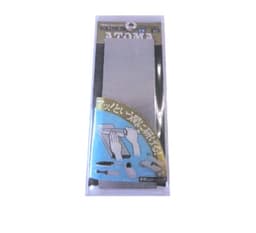
The purchase that extends every stone you own
Atoma Diamond Sharpener #140 (Coarse)
Not really a sharpening stone — this is the flattening plate the Japanese stone world standardized on, and the tool that fixes the one problem every water stone develops. #140 is brutally coarse: it is for lapping stones flat and reprofiling wrecked edges, nothing else.
Read the flattening guidePrice as of October 17, 2026. #ad How we’re funded
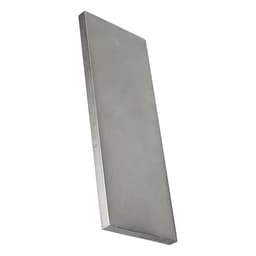
If you would rather never flatten anything again
DMT D8F Dia-Sharp 8-inch Bench Stone, Fine
The single-grit, continuous-surface plate — no holes, so nothing catches a thin blade tip on the way across. Fine 600 is the grit a kitchen knife actually lives at, and this is the version to buy if you want one plate that does the job properly rather than two that do it adequately.
Read the Dia-Sharp D8F reviewPrice as of October 17, 2026. #ad How we’re funded
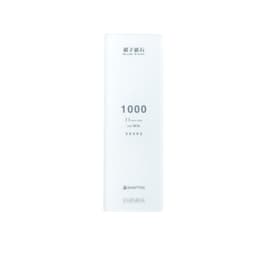
The hard stone that consumes itself slowly
Shapton GlassStone 1000
The upgrade once you know you're sticking with sharpening: a thin, hard ceramic layer bonded to glass. It's splash-and-go (no soaking), stays dead flat far longer than a soft stone, and cuts fast. You'll pay for it.
Read the Shapton Glass 1000 reviewPrice as of October 17, 2026. #ad How we’re funded
Frequently asked questions
How long does a whetstone last?
For a home kitchen, years to decades — but the honest unit is millimetres of abrasive, not time. A typical combination water stone is 20 to 25 mm thick across both grits; sharpening a few kitchen knives takes a fraction of a millimetre a year off it, and keeping it flat takes considerably more. Most home stones are retired because they cracked, got lost or were dished past rescue, not because the abrasive ran out.
What actually wears a whetstone out?
Flattening, mostly. Every sharpening session removes a little abrasive from the middle of the stone, which is why stones hollow out in the centre — and every flattening session then removes abrasive from the whole surface to bring it level with that hollow. Flatten little and often and you lose very little; let a stone dish badly and the correction costs millimetres.
How do I know when to replace a whetstone?
Four signals: the abrasive layer is down to the base or the glass backing, there is a crack running through the block, the hollow is deeper than your flattening plate can chase out, or the stone will not cut after being properly dressed and cleaned. Note the order — a stone that feels slow is usually glazed or loaded with metal, which is a cleaning problem, not a dead stone.
Do diamond sharpening stones wear out?
Yes, differently. They do not dish — DMT describes its Dia-Sharp bench stones as 'guaranteed not to hollow or groove' — so flatness is permanent, but the diamonds dull and detach over time. DMT's own FAQ says its sharpeners 'do not last forever, but they last for several years', and that the first few sessions are a break-in period where the surface 'will seem aggressive in nature' before it smooths out.
Does a thicker whetstone last longer?
Directly, yes — the abrasive thickness is the budget. But it is not the whole story, because hard stones consume themselves far more slowly per session than soft ones. A thin, hard ceramic stone bonded to glass can outlive a much thicker soft stone, because the soft stone both grinds faster and dishes faster, and dishing is what forces the flattening that eats it.
Can a cracked whetstone still be used?
Sometimes, carefully, if the crack is shallow and the block is still supported. The risks are that the crack catches an edge mid-stroke and that the block eventually comes apart under hand pressure. A stone that has cracked through, or that rocks when you press one end, should be retired — it is a cheap item and a chipped knife is not.
Why has my whetstone stopped cutting?
Three likely causes, all fixable before you buy a new one. It is glazed — the surface has burnished over and needs dressing with a flattening plate. It is loaded with metal swarf and needs cleaning. Or it is a soaking stone being used dry: the two families of water stone behave very differently, and a soaking stone that has not been submerged until saturated feels slow and glassy.
How should I store a whetstone so it lasts?
Dry, fully, before it goes away, and somewhere it cannot freeze. A soaked stone put straight into a cupboard grows mould on the binder and can crack as it dries unevenly; a saturated stone left somewhere below freezing can split as the water inside expands. Let it air-dry completely, then store it flat and protected. DMT's own care instruction for its plates is to 'clean after each use with water and wipe dry'.
Sources
- Sharpening stone — Wikipedia — Reference on water, oil and diamond stones: Japanese water-stone grit ranges, why stones dish in the middle with use, and why a diamond plate retains its flatness (accessed August 13, 2026)
- Japanese Water Stones — Sharpening Supplies — The two families of water stone: soaking stones that must be submerged until saturated, and splash-and-go stones that need only surface water (accessed August 13, 2026)
- Comparing Naniwa Stones — Sharpening Supplies — Line-by-line record of which stones in one maker's range soak (Traditional, Aotoishi, Lobster, Hibiki — 'soaked for several minutes') and which are splash-and-go (Chocera Pro, S1/S2 Advance, diamond) (accessed August 13, 2026)
- DMT FAQ — DMT Diamond Sharpeners — DMT's own answers: on break-in, 'the diamond surface will seem aggressive in nature; the diamond sharpener will smooth after initial sharpening with no impact to long term performance. Your first few sharpenings are the break-in period'; 'DMT recommends you use DMT products dry or with water only'; care is to 'clean after each use with water and wipe dry' and 'After several sharpenings, use a mild kitchen abrasive cleanser and a nylon scrub brush'; on life, DMT sharpeners 'do not last forever, but they last for several years'; the polka-dot surfaces are 'slightly recessed' so debris falls away while Dia-Sharp's 'continuous diamond surface' suits 'small-pointed tools'; DMT recommends 'sharpening at a 20-degree angle' and notes 'sharpening at the proper angle is not as important as sharpening at a constant angle'; and the guarantee: 'If your product fails to perform due to defects in materials or workmanship, we will replace it regardless of age' (accessed September 18, 2026)
- 8-in. Dia-Sharp Bench Stone - Fine (D8F) — DMT Diamond Sharpeners — DMT's own product page for SKU D8F: 'Guaranteed not to hollow or groove', a 'precisely engineered Dia-Sharp Bench Stone with continuous diamond surface assures consistent, even sharpening every time', 'fine diamond (25 micron / 600 mesh) for honing a razor sharp edge', 'non-skid rubber feet with the diamond grit clearly marked on side of stone', a 'micronized monocrystalline diamond surface', 'No messy oils are needed either, allowing you to sharpen dry or with water', 'Sharpening surface accommodates range of edges from large knives to small pointed tools', suitable for 'edge repair and honing' and for 'flattening plane soles, irons and chisel backs', and 'Made in the USA'. DMT's own store price on the access date was substantially above what the Amazon listing has been running at. No weight is published (accessed October 7, 2026)
- DMT Diamond and Ceramic Color-Coded Grit Chart — Sharpening Supplies — DMT's own color codes with the mesh and micron figure for each grade (Coarse 325/45 µm, Fine 600/25 µm, Extra-Fine 1200/9 µm) (accessed August 11, 2026)
- How to Sharpen a Knife With a Whetstone — Montana Knife Company — Master-bladesmith walkthrough of whetstone angle, grit progression and deburring (accessed July 21, 2026)
- Knife sharpening — Wikipedia — Reference on edge angle, coarse-to-fine grit progression, and honing vs sharpening (accessed July 21, 2026)
Per-knife specs (steel, HRC, blade length, geometry) are read from each maker’s spec sheet or product listing and dated on the individual review cards above. “Not published” means the manufacturer does not state that figure — we flag it rather than guess.
Keep reading
How to Flatten a Whetstone
The pencil-grid routine, and why little and often costs less abrasive.
Learn the methodSoaking a Whetstone
Which stones soak, which do not, and what happens when you get it wrong.
Read the guideBest Whetstones for Kitchen Knives
The field, with the published thickness and grit for each.
See the picksBest Diamond Sharpening Stones
Plates that never dish, and how they fail instead.
See the picksWhetstone Grit Guide
What every number means, and why the scales do not cross systems.
Read the guideHow to Identify Whetstone Grit
For the unmarked stone you inherited and cannot place.
Read the guide