Why Do My Knives Get Dull So Fast?
Nine times out of ten the steel is innocent. An edge that dies in a week was either never finished properly, is being bent rather than worn, or is meeting something harder than itself.
How this is funded: we earn a commission if you buy through our links, at no extra cost to you. As an Amazon Associate we earn from qualifying purchases. It never changes which knife we recommend, and we’ll tell you when we’d skip one. Full disclosure.
If your knives go dull within days, the most likely explanation is that they are not dull. A rolled edge — one bent to one side rather than worn away — feels exactly like a blunt one and comes back in about ten seconds on a rod. The second most likely explanation is a burr that was never removed when the knife was last sharpened. The third is that something in your kitchen — the board, the drawer, the dishwasher — is destroying the apex between uses. Steel quality is usually the last thing to look at, not the first.
“Dull” describes three different physical conditions that need three different responses, and conflating them is why people sharpen knives that did not need sharpening and replace knives that were fine.
- Rolled. The apex is still there but folded over to one side. Cause: normal use, especially on soft steel. Fix: a honing rod. Takes seconds.
- Worn. The apex has been abraded away, leaving a rounded shoulder with no cutting edge. Cause: cumulative use and board contact. Fix: a 1000-grit stone or equivalent. Takes minutes.
- Damaged. Visible nicks, chips or flat spots that catch the light. Cause: bone, frozen food, a hard board, a drawer, a dishwasher rack. Fix: a coarse stone first, then the 1000. Takes a while, and the knife gets shorter.
The test that separates them takes ten seconds: slice printer paper. If the knife catches, hone it and slice again. If honing fixed it, the edge was rolled. If it did not, the edge is worn or damaged, and looking down the edge under a lamp tells you which — a worn edge reflects nothing, a damaged one glints. Our sharpness tests page covers the rest.
Cause 1: the edge is rolling, and nobody is honing it
This is the overwhelming majority of “my knife went dull in a week” complaints, and it is a property of soft steel rather than a defect. A German or Swiss kitchen knife lives in the mid-to-high 50s HRC — Wüsthof publishes 58 Rockwell for its forged blades and 55 to 57 for its laser-cut ones — and at that hardness a thin apex deforms under normal board pressure long before it actually wears away.
The correction is a rod, used far more often than people think. Wüsthof’s own instructions give “a 14.5-degree angle between the edge of the blade and the honing steel” for Western knives and 10° for Asian ones, running the blade “from the ‘heel’ to the ‘tip’” and repeating “6-8 times while alternating sides”; its Australian site adds that a rod “should be used regularly” and even “after each use,” that a fairly sharp knife may need only 2-3 repetitions, and that the rod should be at least as long as the blade. The general reference agrees on the cadence: steeling is often recommended “immediately before or after using a knife and can be done daily.”
One important exception, from the same reference: in Japan, where harder knives are preferred, “there is little need for steeling intra-day, as the edge does not deform as much. Instead, the blade is honed as needed on a waterstone.” If your knives are Japanese, do not reach for a ribbed steel. A hard edge does not bend back — it breaks. Use a fine ceramic rod, and read do Japanese knives need honing.
Cause 2: the burr was never removed
If the pattern is specifically “it is wonderful for a day and then useless,” this is your answer. Grinding folds steel over the apex into a thin wire. That wire is absurdly sharp and structurally worthless; it shaves hair, impresses everyone, and shears off in the first minute of real cutting, leaving a ragged apex that is worse than what you started with.
Removing it is a technique, not a product: alternating passes at the end of the session, getting progressively lighter — a few per side, then one per side, with barely any pressure — followed by stropping on leather or a few passes on a clean board edge. Hard Japanese steel leaves the most tenacious burrs, because hard steel does not bend away easily. Our sharpening walkthrough covers the deburring sequence and the stropping guide covers the last step.
Cause 3: the board
The board is the hardest thing most knives ever touch, and they touch it on every single cut. A glass or stone board, a ceramic plate, a granite worktop or a stone mortar will flatten an apex in minutes — genuinely minutes, not weeks. Bamboo is a quieter offender: harder than most hardwoods, and glued with resin seams that are abrasive in their own right.
Use end-grain or edge-grain wood, or a soft polyethylene board. This single change does more for edge life than any sharpening upgrade, and it matters most for the flat-edged shapes whose whole edge contacts the board at once — which is why our nakiri guide makes the same point.
Cause 4: storage and washing
An edge is a few microns of steel. It does not survive being thrown in a drawer with other metal, and it does not enjoy a dishwasher. ZWILLING’s own care instructions are explicit on both counts: hand-wash “using lukewarm water, mild dish soap and a non-scratch cloth or sponge,” dry with a towel, and avoid the dishwasher because of “aggressive chemical tablets,” “high temperatures” and “bumps and bangs with other objects.” On storage, the same page says a knife needs “its very own space away from other objects, so not simply thrown in the cutlery drawer” — a block, drawer organizers or protective sleeves.
Add two habits of our own: never leave a knife in a sink of water (someone grabs the blade, and a wet edge against a steel basin is a chipped edge), and dry it immediately rather than leaving it to drain, which also prevents the pitting covered in why knives rust.
Cause 5: how it is being sharpened
A carbide pull-through sharpener scrapes metal off instead of grinding it. It does revive a blunt supermarket knife in seconds — that is the honest case for the cheapest tool in our registry — and it leaves a rough, short-lived edge while removing more steel than the knife needed. If “sharpening” in your kitchen means dragging the blade through a V-slot, the two-week dullness cycle is the expected outcome, not bad luck.
There is also an angle problem. The general sharpening reference frames edge angle as the direct trade between keenness and durability, and Benchmade publishes its own factory spec as “30-35° inclusive (about 17-20° per side)” for comparison. If you sharpen a 14°-per-side Wüsthof or a 15° Japanese edge on a fixed 20° device, you are not maintaining the edge — you are grinding a new, blunter one every time, and the first few cuts into the old thinner steel feel awful. Our angle guide covers matching the tool to the knife.
Cause 6: the steel really is soft
Last, and genuinely last. If you have fixed the board, you hone regularly, you deburr properly, and the knife still fades in a week of heavy use, then you have met the limit of the steel — and this is where hardness matters. Moving from a 55-57 HRC stamped blade to a 58 HRC forged one is a modest step; moving to a 60-61 HRC Japanese core, the band Shun publishes for VG10 and VG-MAX, is a noticeable one.
Do not read that as a recommendation to buy the hardest knife available. Hardness trades toughness for retention: the harder edge holds longer and chips where the softer one would roll, and a chip needs a coarse stone while a roll needs ten seconds. Read the hardness chart and Japanese vs German knives before you spend money on the problem.
| Likely cause | What fixes it | |
|---|---|---|
| Sharp after sharpening, dull within a day | Burr never removed | Light alternating passes, then strop |
| Dull after a week, honing brings it back | Normal edge roll on soft steel | Hone regularly — Wüsthof says even after each use |
| Dull after a week, honing does nothing | Apex genuinely worn | 1000-grit stone, then deburr |
| Light glints off nicks along the edge | Impact damage — bone, board, drawer | Coarse stone first, then 1000 |
| Edge fails fast on a hard Japanese knife | Micro-chipping, often from a steel rod | Fine ceramic rod and a softer board |
| Every knife in the house is dull | The board, the drawer or the dishwasher | Wood or poly board, sleeves, hand-wash |
The routine that ends the cycle
Hone before you cook, on the right kind of rod for your steel. Cut on wood or soft plastic. Wash by hand and dry straight away. Store so nothing touches the edge. Sharpen on a stone when a honing pass stops restoring the paper test — not on a schedule, as how often to sharpen argues — and finish every sharpening session by removing the burr. A kitchen that does those five things sharpens a few times a year, not a few times a month.
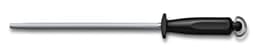
If your knives are soft German or Swiss steel
Victorinox Classic Honing Steel 25 cm / 10-inch (7.8303)
The budget honing rod to pair with a Victorinox (or any soft-steel Western knife): a chrome-plated 25 cm rod with a medium-fine cut, on a black polyamide handle Victorinox makes to match its Swiss Classic knives, at a price that makes daily honing a no-brainer. Victorinox publishes the weight (276 g), the origin (France) and a lifetime warranty.
See it against the rod fieldPrice as of October 17, 2026. #ad How we’re funded
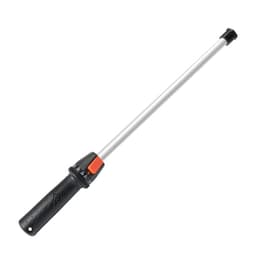
If your knives are hard Japanese steel
SHARPAL 111H RODALL Ceramic Sharpening Rod, Angle Adjustable
The rod to own if your knives are Japanese. A grooved steel rod is too aggressive for a 60+ HRC edge; a ceramic rod abrades a whisker of metal instead of bending the edge back, which is what hard steel actually needs between stone sessions. This one is the rare rod that publishes an angle — a guide adjustable from 14° to 25°, which covers the 15–16° a Japanese edge is ground to.
Read the SHARPAL 111H reviewPrice as of October 17, 2026. #ad How we’re funded
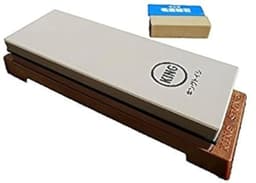
If the edge is genuinely worn and needs rebuilding
King (Matsunaga) KW-65 1000/6000 Combination Whetstone
The stone that has taught more people to sharpen than any other. One side 1000-grit to set an edge, one side 6000-grit to polish it, made in Japan, for the price of a takeout dinner. Start here.
Read the King KW-65 reviewFrequently asked questions
Why does my knife get dull so fast?
Usually one of three things, and rarely the steel. Either the edge is rolled rather than worn — bent over to one side, which feels dull and comes back in seconds on a rod; or it was sharpened and never deburred, so a fragile wire edge collapsed the first time it met a carrot; or it is being destroyed between uses by a glass or stone board, a dishwasher cycle, or contact with other metal in a drawer.
Why does my knife go dull right after I sharpen it?
That is the burr. As you grind, steel folds over the apex into a thin wire that feels extremely sharp and has almost no strength. If you stop there, it shears off during the first few cuts and the knife feels dull again within minutes. The fix is a sequence of alternating, progressively lighter passes at the end of your session, then a strop or a few passes on a clean surface to strip the wire off.
Does a cutting board make knives dull?
Enormously. The edge meets the board on every single cut, so the board is the hardest thing most knives touch. Glass, stone, granite and ceramic plates flatten an apex almost immediately; bamboo is harder than people expect and has abrasive resin seams. Use end-grain or edge-grain wood, or a soft polyethylene board, and the same knife will hold an edge for weeks instead of days.
Does the dishwasher dull knives?
Yes, in two ways, and the makers say so. ZWILLING's own care page rules the dishwasher out for 'aggressive chemical tablets', 'high temperatures' and 'bumps and bangs with other objects' — the detergent attacks the steel's surface and the rattling against other items rolls and chips the apex. One cycle will not ruin a knife; a habit of it will.
How often should I hone my knife?
For a soft Western knife, far more often than most people do. Wüsthof's own guidance is that a honing steel 'should be used regularly' and even 'after each use', with 6 to 8 alternating passes at about 14.5 degrees — and that a fairly sharp knife may need only 2 or 3. For a hard Japanese knife the answer is different: the general reference notes that in Japan harder knives are preferred so 'there is little need for steeling intra-day', and the blade is honed on a water stone instead.
Do harder knives stay sharp longer?
Generally yes, and that is the whole reason to buy hard steel. Wüsthof publishes 58 Rockwell for its forged knives and 55 to 57 for its stamped ones; Shun publishes 60 to 61 for VG10 and VG-MAX. The harder edge resists rolling and wears more slowly — and in exchange it is more brittle, so it chips where a soft edge would simply bend. Hardness moves the failure mode rather than removing it.
Are pull-through sharpeners bad for knives?
The carbide kind are crude. A carbide slot scrapes metal away rather than grinding it, which revives a beaten supermarket knife in seconds and leaves a rough, short-lived edge — plus it removes far more steel than the knife needed. Never put a hard Japanese blade through one. If you want a non-stone option, use a guided clamp system or an electric sharpener with a selectable angle instead.
Is my knife dull or just rolled?
Test it, then hone it. If the knife will not slice printer paper cleanly, run 6 to 8 light alternating passes on a rod and test again — if it slices, the edge was rolled, not worn, and honing is all it ever needed. If nothing changes, the apex is actually gone and only a stone will bring it back. If you can see light glinting off flat spots or nicks along the edge, it is damaged and needs a coarse stone first.
Can a knife be too hard to hone with a steel rod?
Yes. A ribbed steel rod works by bending a rolled edge back, and a 60-plus HRC Japanese edge does not bend far enough to be realigned — it chips instead. Use a fine ceramic rod, which abrades a whisker of metal rather than bending the apex. Shun's own FAQ also asks owners not to use a diamond steel for regular honing, because 'diamond steels are for sharpening and will remove metal from your knife before it is necessary'.
Sources
- Honing steel — Wikipedia — Reference on rod types and what they do: 'The steel and ceramic honing steels may have longitudinal ridges, whereas the diamond-coated steels are smooth but embedded with abrasive diamond particles'; 'Non-abrasive honing rods such as smooth ceramic or ribbed steel are able to remove small amounts of metal via adhesive wear'; 'It is often recommended that steeling be performed immediately before or after using a knife and can be done daily'; and, on hard blades, 'In East Asia, notably Japan, harder knives are preferred, so there is little need for steeling intra-day, as the edge does not deform as much. Instead, the blade is honed as needed on a waterstone' (accessed September 1, 2026)
- Knife sharpening — Wikipedia — Reference on edge angle, coarse-to-fine grit progression, and honing vs sharpening (accessed July 21, 2026)
- How To Sharpen Your WÜSTHOF Knives — The Chef's Table, WÜSTHOF — Wüsthof's published honing procedure and the distinction it draws: honing 'realigns the microscopic teeth on the edge of the blade and prolongs your knife's lifespan', while sharpening 'takes a small amount of steel off the blade, creating a new edge'. It gives a '14.5-degree angle between the edge of the blade and the honing steel' for Western knives and a '10-degree angle' for Asian knives, and says to run the blade 'from the "heel" to the "tip" of the knife' and 'Repeat this process 6-8 times while alternating sides' (accessed September 1, 2026)
- Using a Steel — WÜSTHOF Australia — Wüsthof's own how-to: 'Tilt the knife so that there is a 14 degree angle between the knife and the steel', 'A fairly sharp knife may only need 2-3 repetitions, while a dull knife will need more', 'Honing re-aligns the microscopic teeth in the blade', a honing steel 'should be used regularly' and even 'after each use', and the sizing rule — 'You want to make sure the steel is at least as long as the blade you are either honing or sharpening' (accessed September 1, 2026)
- How to Clean and Care for Your Knife — ZWILLING — ZWILLING's own care instructions: 'clean it by hand using lukewarm water, mild dish soap and a non-scratch cloth or sponge', dried with 'a plain dishtowel or microfiber cloth'; the dishwasher is ruled out for 'aggressive chemical tablets', 'high temperatures' and 'bumps and bangs with other objects'. On wooden handles: 'not dishwasher-safe and should only be washed by hand', with the wood 'regularly treating the wood with oil (e.g. linseed oil) or wax (e.g. beeswax)'. On storage, a knife needs 'its very own space away from other objects, so not simply thrown in the cutlery drawer' — a block, 'drawer organizers or protective sleeves' (accessed September 23, 2026)
- Shun Knives FAQ — Shun Cutlery (Kai USA) — Shun's own answers: 'Shun hardens VG10 and VG-Max steel to 60-61 Rockwell and SG2 to 61-62', 'Shun knives, for example, are sharpened to a 16 degree angle on each side of the blade', and on rods, 'Please do not use a diamond steel for regular honing. Diamond steels are for sharpening and will remove metal from your knife before it is necessary' (accessed August 28, 2026)
- Knife Care 101: A Guide To Maintaining Your Knife — Benchmade — Benchmade's published factory edge spec — 'most Benchmade knives are sharpened at 30-35° inclusive (about 17-20° per side)' — plus its coarse-to-fine grit and stropping guidance (accessed August 13, 2026)
- The Difference Between WÜSTHOF Forged and Stamped Kitchen Knives — WÜSTHOF — Wüsthof's own account of both processes: forged blades start as a single piece of steel heated to over 2000°F and take 'over fifty-four manufacturing steps', hardened to '58 Rockwell'; non-forged blades are 'cut from a high-quality steel sheet using a precision laser' in 'thirty-five manufacturing steps' and run 'between 55 and 57 Rockwell' (accessed August 18, 2026)
Per-knife specs (steel, HRC, blade length, geometry) are read from each maker’s spec sheet or product listing and dated on the individual review cards above. “Not published” means the manufacturer does not state that figure — we flag it rather than guess.
Keep reading
Why Your Knife Won't Get Sharp
The other failure: an edge that will not take, no matter how long you grind.
Read the guideHow Often to Sharpen a Knife
Sharpen when the test fails, not on a calendar.
Read the guideHow to Test Knife Sharpness
Three repeatable tests that tell you which problem you have.
Run the testsHow to Hone a Knife
The rod technique, with the published angles and stroke counts.
Learn the methodKnives in the Dishwasher
What a cycle actually does to an edge, per the makers.
Read the guideBest Honing Steels & Rods
Steel, ceramic or diamond — which rod belongs next to your knives.
See the picks