Knife Care & Storage
Most complaints about bad steel are really complaints about bad care. Six rules, in order of how much difference they make.
How this is funded: we earn a commission if you buy through our links, at no extra cost to you. As an Amazon Associate we earn from qualifying purchases. It never changes which knife we recommend, and we’ll tell you when we’d skip one. Full disclosure.
A good knife that is looked after badly cuts worse than a cheap knife that is looked after well. That is not a moral point, it is a mechanical one: the apex of an edge is a few microns wide, and almost everything that happens to a knife in a normal kitchen is capable of deforming it. The rules below are in order of how much difference they make.
1. Never the dishwasher
The single most damaging thing you can do. Three separate mechanisms are at work: the blade knocks against racks and other items, which rolls or chips the edge; dishwasher detergent is alkaline and mildly abrasive, which etches and dulls the finish; and repeated heat and moisture cycles swell and shrink handle materials, loosening rivets and degrading wood and pakkawood.
A soft Western knife survives this with a rolled edge and a tired handle. A hard Japanese knife at 60+ HRC can come out genuinely chipped from a single cycle. Hand-wash with warm soapy water and a cloth, dry immediately, put it away. Fifteen seconds.
2. Stop scraping the board with the edge
Everyone does this: chop an onion, then use the blade to sweep the pieces into a pan. Dragging a sharpened apex sideways across a hard surface rolls it over immediately — it is arguably the fastest way to dull a knife that exists, and people do it thirty times a day without noticing.
Turn the knife over and scrape with the spine. Or use a bench scraper, which is the correct tool and costs almost nothing. This one habit change will visibly extend how long your knives stay keen.
3. The right board, and the wrong ones
| Effect on the edge | Verdict | |
|---|---|---|
| End-grain wood | Fibers part and close around the edge | Best — and kindest to hard steel |
| Edge-grain wood / bamboo | Slightly harder; bamboo is quite hard | Good; bamboo is the harsher of the two |
| Soft plastic (HDPE) | Gentle; scores over time | Good, and dishwasher-safe itself |
| Composite / paper resin | Harder than plastic, still forgiving | Fine |
| Glass, stone, marble, ceramic | Dulls in a few cuts; can chip hard edges | Never |
| Metal trays, plates, countertops | Immediate damage | Never |
The wood-versus-plastic argument is largely a hygiene debate, not a knife one: both are kind to an edge. What matters is avoiding the bottom two rows. A glass cutting board will take a brand-new Japanese knife from keen to dull in one session.
4. Store it so the edge touches nothing
Loose in a cutlery drawer is the worst option and the most common. Every time the drawer opens, blades slide into each other and into forks.
- Magnetic strip. Our preference: visible, dries the blade, no slot to trap moisture. Place the spine against the magnet first and roll the blade down; slapping the edge on flat is how people chip knives on the thing meant to protect them.
- Knife block. Fine, and slots collect crumbs and moisture. Insert spine-down if the slot orientation allows. Blocks with horizontal slots or loose rod fills avoid the problem.
- In-drawer tray or blade guards. The right answer for a small kitchen. Cheap plastic edge guards cost very little and turn a normal drawer into safe storage.
5. Dry it, especially if it is carbon
Stainless resists corrosion; it does not ignore it. A stainless blade left wet in a sink, or with salt, lemon juice or tomato sitting on it for hours, can pit or spot. Rinse, dry, store.
Carbon steel is another matter entirely. It reacts within minutes: cut an onion and the blade grays, which is a patina— a stable oxide layer that is largely protective and entirely normal. What is not fine is red rust, which appears if the blade is left wet. Carbon knives must be dried immediately after every use, and a thin wipe of food-safe mineral or camellia oil is worth it before storing one for a while.
6. Hone often, sharpen occasionally
Care is the half of maintenance that stops damage. Honing is the half that reverses it. As you cut, the apex rolls to one side; a few strokes on the right rod bends it back, and the knife feels new again in ten seconds.
Match the rod to the steel — a grooved steel rod for softer Western knives, a fine ceramic rod for hard Japanese ones, which chip rather than bend under an aggressive rod. When honing stops working, the edge is worn rather than rolled and it needs a stone. The distinction is set out in sharpening vs honing, and the rods are compared on the honing steels page.
Four things that quietly ruin knives
- Twisting the blade to lever an avocado stone out or pop a joint apart. Lateral force is what a thin blade is worst at; hard steel chips.
- Cutting frozen food or anything with bone in it with a thin knife. Let it thaw, or use a heavier blade.
- Leaving it in the sink under other washing up. Dangerous for your hands and bad for the edge.
- Cheap pull-through sharpeners. The carbide slot scrapes strips of metal off and leaves a rough, short-lived edge. Once in an emergency is survivable; as a routine it eats the knife. See the sharpening systems page for the honest comparison.

For soft Western knives
Wüsthof 9-inch Honing Steel
A honing rod does not sharpen — it realigns a rolled edge between sharpenings. This 9-inch forged steel rod from Wüsthof is the standard for keeping a German knife feeling keen day to day.
Compare all the rodsPrice as of October 20, 2026. #ad How we’re funded
For hard Japanese knives
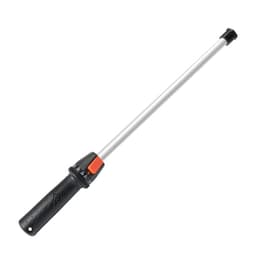
SHARPAL 111H RODALL Ceramic Sharpening Rod, Angle Adjustable
The rod to own if your knives are Japanese. A grooved steel rod is too aggressive for a 60+ HRC edge; a ceramic rod abrades a whisker of metal instead of bending the edge back, which is what hard steel actually needs between stone sessions. This one is the rare rod that publishes an angle — a guide adjustable from 14° to 25°, which covers the 15–16° a Japanese edge is ground to.
Compare all the rodsPrice as of October 20, 2026. #ad How we’re funded
Frequently asked questions
Can you put knives in the dishwasher?
You can, and you should not. Three things happen: the blade knocks against racks and other items, which chips or rolls the edge; hot alkaline detergent is mildly abrasive and corrosive; and repeated heat cycles loosen riveted handles and degrade wood and pakkawood. A hard Japanese knife can be genuinely ruined in one cycle. Hand-wash and dry immediately — it takes fifteen seconds.
What cutting board is best for knives?
End-grain wood is the kindest, because the fibers part around the edge and close again. Edge-grain wood and soft plastic are both fine. What matters far more is what to avoid: glass, stone, marble, ceramic plates and metal trays all dull an edge in a handful of cuts, and can chip a hard Japanese blade outright.
How should I store kitchen knives?
Anywhere the edge does not touch anything hard. A magnetic strip (spine on first, roll the blade to the wood), a knife block, an in-drawer tray or individual blade guards all work. The worst option is loose in a drawer, where knives knock into each other and against cutlery every time it opens.
Do stainless knives rust?
Stainless resists rust; it is not rustproof. Leave a stainless knife wet in a sink, or coated in salt, lemon juice or tomato for hours, and it can develop pitting or spots. Carbon-steel knives are far more reactive and will patina within minutes — that patina is largely protective, but they must be dried immediately every time.
Should I oil my kitchen knife?
Only carbon steel, and only if you are storing it for a while or live somewhere humid. A thin wipe of food-safe mineral oil (camellia oil is traditional) keeps a carbon blade from rusting. Stainless knives do not need it. Wooden handles benefit from an occasional wipe of mineral oil to stop them drying out.
What is the fastest way to dull a knife?
Scraping the board with the edge. Sweeping chopped food aside using the sharp side rolls the apex over instantly — turn the knife and use the spine instead. After that: cutting on glass or stone, twisting the blade to lever something apart, and the dishwasher.
Sources
- Rockwell hardness test — Wikipedia — Definition of the Rockwell C (HRC) scale used to state knife-steel hardness (accessed July 21, 2026)
- Knife sharpening — Wikipedia — Reference on edge angle, coarse-to-fine grit progression, and honing vs sharpening (accessed July 21, 2026)
- Japanese kitchen knife — Wikipedia — Reference on gyuto/santoku/nakiri, single- vs double-bevel (kataba/ryoba) and edge angles (accessed July 21, 2026)
Per-knife specs (steel, HRC, blade length, geometry) are read from each maker’s spec sheet or product listing and dated on the individual review cards above. “Not published” means the manufacturer does not state that figure — we flag it rather than guess.
Keep reading
Why Your Knife Rusts
Brown spots, black spots and pitting — which is damage and which is patina.
Read the guideSharpening vs Honing
The maintenance habit that keeps an edge alive.
Read the explainerBest Honing Steels
The ten-second daily habit, and which rod suits your knives.
See the rodsKnife Terms Glossary
Patina, tang, kullenschliff — every term defined.
Look one upJapanese Knife Buying Guide
Choosing a knife you'll be willing to look after.
Read the guideHow Often to Sharpen a Knife
Care habits decide the schedule more than steel does.
Read the guideKnife Handle Materials
Which handles need oiling, and which need nothing.
Read the guide