Can You Sharpen a Ceramic Knife?
Yes, but only with diamond — and only if you accept that a brittle blade with a chipped edge is usually past saving. The hardness numbers explain both halves of that.
How this is funded: we earn a commission if you buy through our links, at no extra cost to you. As an Amazon Associate we earn from qualifying purchases. It never changes which knife we recommend, and we’ll tell you when we’d skip one. Full disclosure.
Yes — with a diamond abrasive, light pressure and realistic expectations. No other abrasive in a normal kitchen is hard enough to cut a ceramic blade. That is not an opinion about stone quality; it is the hardness ordering. Ceramic knife blades are typically zirconium dioxide, and they “typically score 8.5 on the Mohs scale of mineral hardness, compared to 4.5 for normal steel and 7.5 to 8 for hardened steel and 10 for diamond.” An abrasive has to outrank the material it is cutting. Diamond does; a water stone does not reliably; a ribbed steel and a carbide pull-through are not even in the conversation.
The industrial method tells you the same thing from the other direction: a ceramic blade “is sharpened by grinding the edges with a diamond-dust-coated grinding wheel.” That is what the factory does, and a hand-held diamond plate is the domestic version of it.
Why most sharpeners refuse the job
Read the manual of almost any electric sharpener and you will find ceramic excluded. EdgeCraft’s own user guide for the Trizor XV — a machine whose first stage “shapes the edge using 100% diamond abrasives” and which therefore hasthe right abrasive — still instructs you to “not attempt to use this sharpener to sharpen either ceramic knives or scissors.”
The abrasive is not the problem there; the mechanism is. A guided slot applies spring pressure at a fixed geometry designed around steel, and steel tolerates being pushed. Ceramic is brittle: it “will break rather than flex if twisted.” A machine that holds a thin zirconia blade at an angle and presses it against a spinning wheel is a good way to crack it. Hand control is not a nicety on a ceramic edge; it is the whole technique.
What to look for in the tool
Diamond, and only diamond. Plates or rods. Our diamond plate roundup is the field, and the grit vocabulary comes from DMT’s own published color-coded chart: Coarse at 325 mesh / 45 micron, Fine at 600 mesh / 25 micron, Extra-Fine at 1200 mesh / 9 micron.
A continuous surface, not an interrupted one.This is the one real selection criterion for ceramic. DMT’s polka-dot DuoSharp surfaces are “slightly recessed” so debris falls away, while its Dia-Sharp line has a “continuous diamond surface” that DMT itself recommends for “small-pointed tools.” On a brittle edge, an interrupted surface means the edge repeatedly drops into and climbs out of a void — which is where chips start. A continuous plate supports the edge the whole way across.
Fine grades, not coarse ones. Coarse diamond removes material fast, and fast material removal on zirconia means micro-fracturing rather than clean cutting. Start at Fine (600 mesh) and go finer. Keep a coarse plate for genuine repair work only.
Flatness you can rely on.Water stones dish in the middle with use; a diamond plate retains its flatness, which is exactly why it is the right format here — you are not going to flatten a stone between passes on a knife that fractures.
The method, in six steps
- Decide whether the blade is worth it. If the edge has a chip you can see with the naked eye, grinding it out will take off a lot of material and may set up the next break. Factory sharpening services exist for this reason.
- Use water, and keep the plate wet.DMT’s own instruction for its products is to use them “dry or with water only.” Water carries swarf away and keeps the surface cutting.
- Match the existing angle, roughly 15° per side. Most ceramic kitchen knives are ground acutely, like Japanese steel. Our angle guide covers how to find and hold it.
- Almost no pressure. Let the diamond do the work. Pressure is what fractures a brittle edge; the stroke should feel like you are guiding the blade rather than pushing it.
- Few strokes, then check.Ceramic does not announce a burr the way steel does, so the feel you would normally rely on is absent. Work in sets of five or six alternating passes and test between sets — our sharpness tests are the honest way to tell.
- Do not strop and do not hone it on steel. A leather strop realigns bent steel; there is nothing bent to realign on a ceramic edge. A ribbed steel rod is softer than the blade and does nothing but risk a knock.
The honest verdict on ceramic knives
They hold an edge far longer than steel, they do not corrode, and for slicing boneless meat, vegetables, fruit and bread they are genuinely good. The costs are the other side of the same hardness: no bone, no frozen food, no prying or twisting, and a drop on a tile floor is often terminal. Where a steel edge rolls and can be honed straight in ten seconds, a ceramic edge chips and needs diamond.
If that trade does not appeal, the comparable move in steel is a hard Japanese stainless core — 60–61 HRC, acute geometry, long edge life — which gives you most of the cutting benefit while remaining sharpenable on anything in our whetstone roundup. The three diamond plates below are what we would use on ceramic if you already own one: a continuous-surface plate first, the two-grit option second, and a coarse plate only for repair.
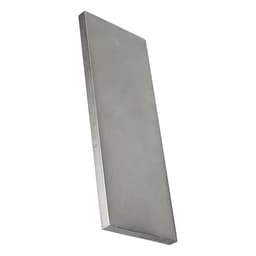
Our pick for ceramic: a continuous diamond surface
DMT D8F Dia-Sharp 8-inch Bench Stone, Fine
The single-grit, continuous-surface plate — no holes, so nothing catches a thin blade tip on the way across. Fine 600 is the grit a kitchen knife actually lives at, and this is the version to buy if you want one plate that does the job properly rather than two that do it adequately.
See it in the diamond plate roundupPrice as of October 7, 2026. #ad How we’re funded
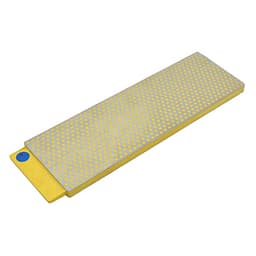
Two diamond grits in one plate
DMT DuoSharp 8-inch Bench Stone, Fine/Coarse (W8FCNB)
The diamond plate to buy if you are buying one. Coarse on one face, Fine on the other, on DMT's interrupted 'polka-dot' surface that clears swarf instead of clogging with it. It cuts hard Japanese steel faster than any water stone and it will still be dead flat in ten years.
Read the full DuoSharp reviewPrice as of October 7, 2026. #ad How we’re funded
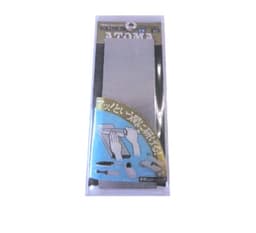
For heavy repair work only
Atoma Diamond Sharpener #140 (Coarse)
Not really a sharpening stone — this is the flattening plate the Japanese stone world standardized on, and the tool that fixes the one problem every water stone develops. #140 is brutally coarse: it is for lapping stones flat and reprofiling wrecked edges, nothing else.
Compare it with the other platesPrice as of October 7, 2026. #ad How we’re funded
Frequently asked questions
Can you sharpen a ceramic knife at home?
Yes, with a diamond abrasive and a light touch. Nothing else is hard enough: zirconia blades typically score 8.5 on the Mohs scale against 4.5 for normal steel and 7.5 to 8 for hardened steel, with diamond at 10. A diamond plate or a diamond rod will cut a ceramic edge; a water stone, a ribbed honing steel and a carbide pull-through will not.
Why won't a whetstone sharpen a ceramic knife?
Because the abrasive has to be harder than the material it is cutting, and most water-stone abrasives are not harder than zirconia. The blade scores about 8.5 on the Mohs scale — above hardened steel at 7.5 to 8. You will polish the stone against the knife rather than the other way round. Diamond, at 10, is the abrasive that outranks it.
Can I use an electric sharpener on a ceramic knife?
Not unless the maker says its model is for ceramic. EdgeCraft's own user guide for the Trizor XV states plainly: do 'not attempt to use this sharpener to sharpen either ceramic knives or scissors'. Machines designed around steel use fixed abrasive geometry and spring pressure that a brittle blade does not tolerate.
How do manufacturers sharpen ceramic knives?
With diamond. The standard industrial method is grinding the edge with a diamond-dust-coated grinding wheel — which is also why several ceramic-knife brands offer a factory sharpening service rather than selling you a sharpener. If a blade is valuable and badly dulled, that service is usually the better answer than a hand plate.
Can a chipped ceramic knife be repaired?
Usually not worth it. A ceramic blade is brittle: it is 'subject to chipping, and will break rather than flex if twisted'. Removing a chip means grinding away the surrounding material with diamond until the edge line is continuous again, which on a thin blade changes the profile and can set up another break. Small nicks, yes. A missing piece of tip, no.
Do ceramic knives need sharpening as often as steel?
No — they hold an edge much longer than steel, which is the main reason people buy them. The trade is what happens at the end of that period: a steel edge rolls and can be honed straight in seconds, where a ceramic edge chips and needs a diamond abrasive or a factory service. Long intervals, harder recovery.
What should you never cut with a ceramic knife?
Bone, frozen food, and anything that involves prying or twisting. Ceramic blades are 'unsuitable for chopping through hard foods such as bones or frozen foods, and for applications which require prying, which may cause breaking or chipping' — and dropping one on a tile floor is a common way to end it. They are made for boneless meat, vegetables, fruit and bread.
Sources
- Ceramic knife — Wikipedia — Reference on zirconia (ZrO2) blades: they 'typically score 8.5 on the Mohs scale of mineral hardness, compared to 4.5 for normal steel and 7.5 to 8 for hardened steel and 10 for diamond'; 'the ceramic blade is sharpened by grinding the edges with a diamond-dust-coated grinding wheel'; the blade 'is brittle, subject to chipping, and will break rather than flex if twisted'; and ceramic blades are 'unsuitable for chopping through hard foods such as bones or frozen foods, and for applications which require prying' (accessed October 6, 2026)
- DMT Diamond and Ceramic Color-Coded Grit Chart — Sharpening Supplies — DMT's own color codes with the mesh and micron figure for each grade (Coarse 325/45 µm, Fine 600/25 µm, Extra-Fine 1200/9 µm) (accessed August 11, 2026)
- DMT FAQ — DMT Diamond Sharpeners — DMT's own answers: on break-in, 'the diamond surface will seem aggressive in nature; the diamond sharpener will smooth after initial sharpening with no impact to long term performance. Your first few sharpenings are the break-in period'; 'DMT recommends you use DMT products dry or with water only'; care is to 'clean after each use with water and wipe dry' and 'After several sharpenings, use a mild kitchen abrasive cleanser and a nylon scrub brush'; on life, DMT sharpeners 'do not last forever, but they last for several years'; the polka-dot surfaces are 'slightly recessed' so debris falls away while Dia-Sharp's 'continuous diamond surface' suits 'small-pointed tools'; DMT recommends 'sharpening at a 20-degree angle' and notes 'sharpening at the proper angle is not as important as sharpening at a constant angle'; and the guarantee: 'If your product fails to perform due to defects in materials or workmanship, we will replace it regardless of age' (accessed September 18, 2026)
- Sharpening stone — Wikipedia — Reference on water, oil and diamond stones: Japanese water-stone grit ranges, why stones dish in the middle with use, and why a diamond plate retains its flatness (accessed August 13, 2026)
- Chef'sChoice 0101500 Trizor XV Electric Knife Sharpener - User Guide — A reproduction of EdgeCraft's own user guide for this model. It states that on a first sharpening of a European/American edge 'it may take up to 20 pair of pulls to fully re-angle the edge of a thin blade', that on a contemporary Asian blade 'only a few (1-2) pairs of alternating pulls... will be needed to develop a burr', that afterwards 'you should be able to re-sharpen to a razor sharp edge 3 or more times using only Stage 3', that serrated blades 'use only Stage 3' with 'five (5) to ten (10) pairs of alternating pulls', that you should 'not attempt to use this sharpener to sharpen either ceramic knives or scissors' nor 'ax blades or any blade that does not fit freely', and gives '125W on the nameplate' at 120V (accessed August 28, 2026)
- Knife sharpening — Wikipedia — Reference on edge angle, coarse-to-fine grit progression, and honing vs sharpening (accessed July 21, 2026)
Per-knife specs (steel, HRC, blade length, geometry) are read from each maker’s spec sheet or product listing and dated on the individual review cards above. “Not published” means the manufacturer does not state that figure — we flag it rather than guess.
Keep reading
DMT Dia-Sharp D8F Review
Our pick for ceramic, reviewed against DMT's own published figures.
Read the reviewBest Diamond Sharpening Stones
Six plates compared on published grit and micron figures.
See the picksDiamond Stone vs Whetstone
What each abrasive can and cannot cut, and why it matters here.
Compare themWhetstone Grit Guide
Which grit does what, and how mesh and micron figures relate.
Read the guideKnife Hardness Chart
HRC for steel, Mohs for ceramics — two scales, one question.
See the numbersHow to Fix a Chipped Knife
The steel version of the repair, and how much metal it costs.
Fix the edgeThe Easiest Knives to Sharpen
Where ceramic sits on the difficulty scale, and what sits at the other end.
Read the ranking