Honing Steel vs Whetstone
Not a rivalry — a sequence. One tool keeps an edge usable between sharpenings, the other puts the edge back. Which you buy first is decided by how hard your knives are.
How this is funded: we earn a commission if you buy through our links, at no extra cost to you. As an Amazon Associate we earn from qualifying purchases. It never changes which knife we recommend, and we’ll tell you when we’d skip one. Full disclosure.
Buy the rod first if your knives are soft Western steel; buy the stone first if they are hard Japanese blades, or if they are blunt right now. These two tools are not competitors — a rod straightens an edge that has bent, a stone grinds a new edge when the old one is worn away, and a kitchen that cooks regularly wants both. What decides the order you buy them in is hardness: soft edges roll (the rod’s job), hard edges wear and chip (the stone’s).
This page is about the purchase. If what you want is the difference between the two processes, that is sharpening vs honing; if you are trying to work out why one rod is sold as a “honing steel” and an almost identical one as a “sharpening steel,” that is honing steel vs sharpening steel. Here we are answering: which tool goes in the drawer first, and do you need the other one at all.
What each tool physically does
A rod bends steel back.Cutting rolls the very apex of an edge over to one side — microscopically, but enough that the knife stops biting. A rod pushes that bent steel back into line. Wüsthof, describing its own rods, puts it as honing that “realigns the microscopic teeth on the edge of the blade and prolongs your knife’s lifespan,” against sharpening, which “takes a small amount of steel off the blade, creating a new edge.” That is the cleanest statement of the division you will get from a maker.
One honest qualification, from the general reference rather than from a marketing page: even smooth ceramic and ribbed steel rods “are able to remove small amounts of metal via adhesive wear.” So a rod is not literally non-destructive. It is just two or three orders of magnitude gentler than a stone.
A stone removes steel until two bevels meet.That intersection is the apex, and it is the thing that cuts. A stone is the only tool in a normal kitchen that can create one — which is also why it is the only tool that can fix a chip, reset a bevel that has been ground at the wrong angle, or rescue a knife that has been dragged through a carbide pull-through for years.
The one variable that decides your answer: hardness
Everything else about this decision follows from how hard your knives are, so start there.
Soft Western steel.Wüsthof publishes 58 Rockwell for its forged knives and 55 to 57 for its laser-cut ones. At that hardness an edge deforms under ordinary board pressure well before it wears away, so most of what feels like dullness is a rolled apex. A rod fixes that in seconds, which is why Wüsthof’s own guidance says a steel “should be used regularly” and even “after each use,” with “6-8 times while alternating sides” at “a 14.5-degree angle between the edge of the blade and the honing steel” — and only “2-3 repetitions” for a knife that is still fairly sharp. Rod first.
Hard Japanese steel.Shun publishes 60-61 Rockwell for VG10 and VG-MAX; ZWILLING publishes 61 for Miyabi’s FC61. A 61 HRC edge does not bend far enough to be worth straightening — it micro-chips instead. The general reference describes exactly this regional difference: in Japan, where harder knives are preferred, “there is little need for steeling intra-day, as the edge does not deform as much. Instead, the blade is honed as needed on a waterstone.” Stone first, and a fine ceramic rod rather than a ribbed steel one when you do want between-session maintenance.
A drawer with both kinds in it. Most kitchens. Buy the stone first, because it covers every knife you own, then add the rod that matches your softer knives. Our Japanese honing page covers the hard-steel half in detail.
| Honing rod | Whetstone | |
|---|---|---|
| What it does | Realigns a rolled edge (and abrades very lightly) | Grinds a new apex by removing steel |
| Time per use | About 10 seconds | 10-20 minutes including setup |
| How often | Before or after each session on soft steel | When honing stops restoring the edge |
| Fixes a genuinely blunt knife | No | Yes |
| Fixes a chip or a bad bevel | No | Yes, with a coarse grit first |
| Right for 60+ HRC Japanese steel | Only a fine ceramic one | Yes — this is the primary tool |
| Skill needed | Minutes to learn | A few sessions to get consistent |
| Maintenance of the tool itself | Wipe clean; ceramic is brittle, do not drop it | Keep it flat, know whether it soaks, dry before storing |
| Typical price band | Budget to mid | Budget to premium |
The case for buying the rod first
It gets used. That is the entire argument, and it is a strong one. A rod hangs within reach, takes ten seconds, needs no water, no flattening and no cleanup, and it keeps a Western knife feeling keen for weeks between stone sessions. For a household with German or Swiss knives and no sharpening habit, a rod plus the discipline to use it will do more for day-to-day cutting than a stone bought with good intentions and used twice.
Two cautions. First, match the rod to the steel: a ribbed steel rod on a 61 HRC Japanese blade is the wrong tool, and a fine ceramic one is right. Second, a rod slowly loses the argument — each session removes a trace of metal and the edge gradually rounds, so a stone eventually becomes necessary no matter how diligent you are. Our honing walkthrough covers the technique and the rod roundup covers which to buy.
The case for buying the stone first
It can do everything. A stone restores an edge a rod cannot touch, fixes damage, and — with a few light passes on the fine side — does the rod’s job too. If your knives are currently dull, a rod will not help you today and a stone will.
It also teaches you something a rod never will: what a bevel is, how an apex forms, and what a burr feels like. That knowledge is what turns knife ownership from guesswork into maintenance. The master-bladesmith walkthrough we cite makes the same point about technique — light consistent pressure and a steady angle matter more than equipment.
The honest costs: a stone needs a flat surface, water, and twenty minutes; it dishes with use and has to be flattened; and there are two families to know about, since soaking stones must be submerged until saturated while splash-and-go stones need only surface water. Our beginner stone page covers what to buy, soaking a whetstone covers which family yours is in, and how long a whetstone lasts covers what flattening costs it.
The sequence a working kitchen actually uses
- Before cooking: two to eight passes on the rod, if the knife is soft steel. Ten seconds.
- When honing no longer restores it:a stone session — 1000 grit to set the edge, 3000 or 6000 to refine it, then strip the burr.
- When you can see damage: a coarse stone or a diamond plate first, then the 1000. The chipped-knife guide covers that.
- Never:a ribbed steel rod on a hard Japanese edge, or a fixed 20° pull-through on any knife whose maker published a finer angle.
One diagnostic that saves money and steel: before you buy either tool, hone and retest. If a knife fails the paper-slice test, give it 6 to 8 light alternating passes on any rod you can borrow and test again. If it slices, the edge was rolled and you needed a rod. If nothing changes, the apex is gone and only a stone will help. That test is the opening section of why knives get dull so fast.
What about the other options?
Guided systems and electricsoccupy the stone’s role, not the rod’s: they remove steel and create an apex, with the angle controlled for you. Whetstone vs electric sharpener is that comparison, and sharpening without a whetstone ranks every stone-free route.
Diamond platesare stones that never dish and need no soaking, so if the stone’s upkeep is what puts you off, that is the version to buy — see diamond stone vs whetstone.
Strops sit below the rod: they remove a burr and polish, and they cannot realign a rolled edge or form an apex. Useful last step, not a first purchase. How to strop a knife covers where it pays off.
Prices on the cards above come only from our live price layer, with the date they were read; we own none of these tools and claim no test results, which our methodology page explains.
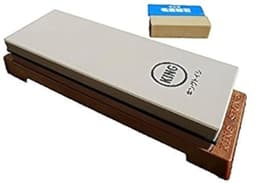
Buy the stone first if your knives are Japanese or genuinely dull
King (Matsunaga) KW-65 1000/6000 Combination Whetstone
The stone that has taught more people to sharpen than any other. One side 1000-grit to set an edge, one side 6000-grit to polish it, made in Japan, for the price of a takeout dinner. Start here.
Read the King KW-65 review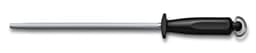
Buy the rod first if your knives are soft Western steel
Victorinox Classic Honing Steel 25 cm / 10-inch (7.8303)
The budget honing rod to pair with a Victorinox (or any soft-steel Western knife): a chrome-plated 25 cm rod with a medium-fine cut, on a black polyamide handle Victorinox makes to match its Swiss Classic knives, at a price that makes daily honing a no-brainer. Victorinox publishes the weight (276 g), the origin (France) and a lifetime warranty.
See it against the rod fieldPrice as of October 28, 2026. #ad How we’re funded
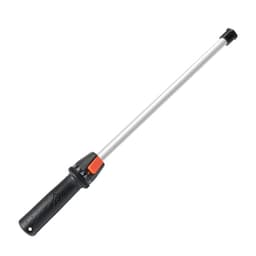
The rod to own if your knives are 60 HRC and up
SHARPAL 111H RODALL Ceramic Sharpening Rod, Angle Adjustable
The rod to own if your knives are Japanese. A grooved steel rod is too aggressive for a 60+ HRC edge; a ceramic rod abrades a whisker of metal instead of bending the edge back, which is what hard steel actually needs between stone sessions. This one is the rare rod that publishes an angle — a guide adjustable from 14° to 25°, which covers the 15–16° a Japanese edge is ground to.
Read the SHARPAL 111H reviewPrice as of October 28, 2026. #ad How we’re funded
Frequently asked questions
Honing steel or whetstone — which should I buy first?
If your knives are soft Western steel (German or Swiss, in the mid-to-high 50s HRC), buy the rod first: those edges roll rather than wear, and a rod restores them in about ten seconds. If your knives are hard Japanese blades at 60 HRC and up, buy the stone first — a hard edge barely rolls, so a steel rod has little to straighten and can chip it instead. If every knife you own is genuinely blunt right now, buy the stone regardless, because a rod cannot rebuild an edge that is gone.
Do you need both a honing steel and a whetstone?
Most kitchens are better off with both, and they cost less together than one mid-range knife. They do different jobs: the rod is maintenance between sharpenings — Wüsthof's own guidance is that a steel 'should be used regularly' and even 'after each use' — and the stone is the periodic rebuild. Owning only a rod means your edges slowly round over; owning only a stone means you sharpen more often than you need to.
Does a honing steel sharpen a knife?
Not in the sense people mean. A rod realigns steel that has bent over, which restores a knife that feels dull without being worn. That said, the general reference is blunt that even 'non-abrasive honing rods such as smooth ceramic or ribbed steel are able to remove small amounts of metal via adhesive wear' — so a rod is not literally non-destructive, it just removes far less than a stone and cannot form a new apex.
Can a whetstone replace a honing steel?
Functionally yes, practically no. A few light passes on a fine stone will do what a rod does, and more. But a rod takes ten seconds from a hook on the wall, while a stone needs setting up, wetting and cleaning afterward — so in a real kitchen the rod gets used and the stone does not. The exception is hard Japanese steel, where the reference notes that in Japan 'the blade is honed as needed on a waterstone' rather than steeled daily.
How often should you use each one?
The rod: before or after each session for a soft Western knife, which is what Wüsthof itself recommends, using 6 to 8 alternating passes at about 14.5 degrees (2 to 3 if the knife is still fairly sharp). The stone: when honing stops restoring the edge — when a knife that has just been honed still fails to slice paper cleanly. For a home kitchen that is typically a few times a year, not monthly.
What angle do you hold each tool at?
Wüsthof publishes 14.5 degrees between blade and rod for Western knives and 10 degrees for Asian ones, running heel to tip. On a stone you match the knife's own bevel — roughly 20 degrees per side for a Western edge, about 15 for a Japanese one, and whatever the maker publishes when it publishes anything. Consistency matters more than the exact figure in both cases.
Is a ceramic rod a honing steel or a sharpening tool?
Both, mildly, and that is the point of it. A ceramic rod abrades a whisker of metal rather than bending the apex back, which is the mechanism a hard, thin Japanese edge actually needs — it does not deform far enough to be realigned. Shun's own FAQ asks owners not to use a diamond steel for routine honing because 'diamond steels are for sharpening and will remove metal from your knife before it is necessary'; a fine ceramic sits between the two.
What does a whetstone do that nothing else does?
It forms a new apex. Every other maintenance tool either straightens the edge you have or polishes it; only an abrasive that removes meaningful steel can grind two bevels back into intersection. That is also why a stone is the only tool that can fix a chip, correct a bevel someone ground at the wrong angle, or rescue a knife that has been run through a pull-through sharpener for years.
Do I need a soaking stone or a splash-and-go one?
Either, as long as you know which you have. Water stones split into two families: soaking stones, which must be submerged until saturated, and splash-and-go stones, which need only surface water. Using a soaking stone dry makes it feel glazed and slow, which is a common reason beginners conclude their stone is no good.
Sources
- Honing steel — Wikipedia — Reference on rod types and what they do: 'The steel and ceramic honing steels may have longitudinal ridges, whereas the diamond-coated steels are smooth but embedded with abrasive diamond particles'; 'Non-abrasive honing rods such as smooth ceramic or ribbed steel are able to remove small amounts of metal via adhesive wear'; 'It is often recommended that steeling be performed immediately before or after using a knife and can be done daily'; and, on hard blades, 'In East Asia, notably Japan, harder knives are preferred, so there is little need for steeling intra-day, as the edge does not deform as much. Instead, the blade is honed as needed on a waterstone' (accessed September 1, 2026)
- Knife sharpening — Wikipedia — Reference on edge angle, coarse-to-fine grit progression, and honing vs sharpening (accessed July 21, 2026)
- How To Sharpen Your WÜSTHOF Knives — The Chef's Table, WÜSTHOF — Wüsthof's published honing procedure and the distinction it draws: honing 'realigns the microscopic teeth on the edge of the blade and prolongs your knife's lifespan', while sharpening 'takes a small amount of steel off the blade, creating a new edge'. It gives a '14.5-degree angle between the edge of the blade and the honing steel' for Western knives and a '10-degree angle' for Asian knives, and says to run the blade 'from the "heel" to the "tip" of the knife' and 'Repeat this process 6-8 times while alternating sides' (accessed September 1, 2026)
- Using a Steel — WÜSTHOF Australia — Wüsthof's own how-to: 'Tilt the knife so that there is a 14 degree angle between the knife and the steel', 'A fairly sharp knife may only need 2-3 repetitions, while a dull knife will need more', 'Honing re-aligns the microscopic teeth in the blade', a honing steel 'should be used regularly' and even 'after each use', and the sizing rule — 'You want to make sure the steel is at least as long as the blade you are either honing or sharpening' (accessed September 1, 2026)
- Shun Knives FAQ — Shun Cutlery (Kai USA) — Shun's own answers: 'Shun hardens VG10 and VG-Max steel to 60-61 Rockwell and SG2 to 61-62', 'Shun knives, for example, are sharpened to a 16 degree angle on each side of the blade', and on rods, 'Please do not use a diamond steel for regular honing. Diamond steels are for sharpening and will remove metal from your knife before it is necessary' (accessed August 28, 2026)
- Japanese Water Stones — Sharpening Supplies — The two families of water stone: soaking stones that must be submerged until saturated, and splash-and-go stones that need only surface water (accessed August 13, 2026)
- How to Sharpen a Knife With a Whetstone — Montana Knife Company — Master-bladesmith walkthrough of whetstone angle, grit progression and deburring (accessed July 21, 2026)
- The Difference Between WÜSTHOF Forged and Stamped Kitchen Knives — WÜSTHOF — Wüsthof's own account of both processes: forged blades start as a single piece of steel heated to over 2000°F and take 'over fifty-four manufacturing steps', hardened to '58 Rockwell'; non-forged blades are 'cut from a high-quality steel sheet using a precision laser' in 'thirty-five manufacturing steps' and run 'between 55 and 57 Rockwell' (accessed August 18, 2026)
Per-knife specs (steel, HRC, blade length, geometry) are read from each maker’s spec sheet or product listing and dated on the individual review cards above. “Not published” means the manufacturer does not state that figure — we flag it rather than guess.
Keep reading
Sharpening vs Honing
What the two processes do to the steel, before you decide what to buy.
Read the guideHoning Steel vs Sharpening Steel
Two names for rods that do different things — the naming trap.
Compare themBest Honing Steels & Rods
Steel, ceramic and diamond rods compared on what each actually does.
See the picksBest Whetstones for Kitchen Knives
The stone field, with published grit and dimensions for each.
See the picksWhy Knives Get Dull So Fast
Rolled, worn or damaged — the diagnosis that tells you which tool you need.
Read the guideDo Japanese Knives Need Honing?
Why a 60 HRC edge changes the answer to this whole question.
Read the guide